

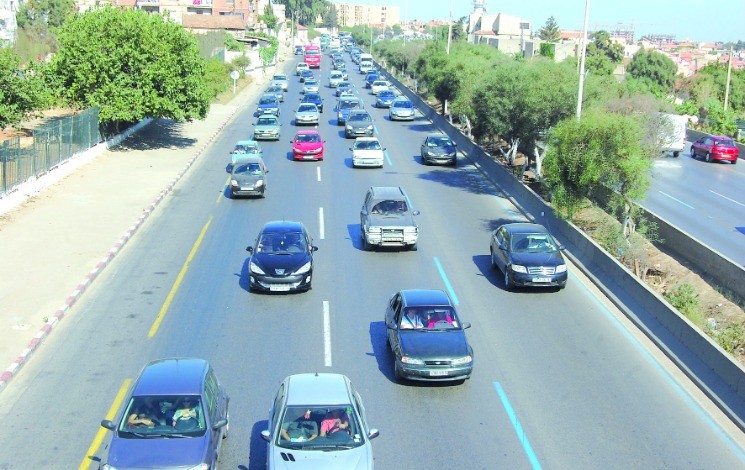
Placed under a level 3 heatwave alert, a vast portion of the country is grappling with exceptionally challenging weather conditions. Civil Protection authorities are urging motorists to exercise maximum caution. Mechanical failures, exhaustion, dehydration, and reduced concentration are compounding the risk of collisions on roads that are already notably lethal during this summer season. This warning was shared on Sunday with the news outlet Le Jeune Indépendant by Lieutenant Colonel Nassim Bernaoui, sub-director of statistics and communications at the General Directorate for Civil Protection (GDCP).
Lieutenant Colonel Nassim Bernaoui explained that extreme thermal conditions do not merely compromise a operator’s physical state; they also weaken the vehicles themselves. Noting that “with figures vastly exceeding seasonal benchmarks and sometimes climbing to 47 or 48 °C, transit hazards escalate significantly,” he added that this scorching spell, projected to persist for days, demands “heightened awareness from all commuters.”
The official emphasized that an unmaintained automobile becomes particularly vulnerable during periods of intense warmth. “A poorly serviced car can rapidly break down or suffer engine overheating. It is critical to inspect the cooling framework, tire conditions, and inflation levels before departing,” he recommended.
Civil Protection units continue to deploy regularly to assist motorists stranded by mechanical breakdowns caused or aggravated by the high temperatures. “When a car stalls far from immediate help, the driver can remain trapped under intense sunlight for hours before emergency crews arrive,” he cautioned, adding that such emergencies can swiftly turn critical, especially in remote zones.
The commander also issued a warning regarding frequently overlooked habits. Pressurized canisters, aerosol products, or heat-sensitive items left inside the cabin can spark incidents or trigger fires under direct solar rays. He advised operators to conduct a comprehensive mechanical sweep prior to any lengthy journey.
Beyond the mechanical aspects, the primary concern for emergency services remains the driver’s physical fitness. Lieutenant Colonel Bernaoui explained that “extreme heat causes exhaustion, dehydration, drowsiness, and a drop in alertness. A motorist’s spatial assessment worsens, reaction times slow down, and the probability of a crash spikes.”
Individuals dealing with chronic health issues, particularly diabetes or high blood pressure, remain highly vulnerable to the fallout of extreme temperatures. The GDCP representative recommended “avoiding long-distance travel between 10 a.m. and 5 p.m., the window when thermal intensity peaks, and instead planning journeys for early morning or late evening.”
When travel cannot be postponed, he suggested “confirming the climate control system operates correctly, carrying ample water reserves, stopping frequently to hydrate, and never operating a vehicle while fatigued,” maintaining that “thorough journey planning often prevents hazardous scenarios.”
Reflecting on the broader state of transit security, Lieutenant Colonel Bernaoui noted that extreme heat functions primarily as an aggravating catalyst. In his estimation, the root causes of road trauma remain tied to reckless behavior behind the wheel. He stressed that “excessive speed, hazardous overtaking, careless maneuvers, and a disregard for traffic laws continue to trigger the most severe collisions.”
Data from emergency services validate the severity of the crisis. Since the launch of the summer season, nearly 240 individuals have perished and upward of 10,900 others have sustained injuries in traffic incidents nationwide. According to the official, these metrics highlight a persistently troubling casualty rate despite ongoing public awareness initiatives managed by relevant departments.
Lieutenant Colonel Bernaoui also observed that the surge in major accidents is no longer confined to the summer months. Remarking that “previously, casualty lists peaked almost exclusively during summertime, but today, severe crashes are documented virtually year-round, with figures remaining elevated regardless of the season.” He revealed that Civil Protection units face high-impact collisions on a daily basis. Certain impacts require specialized extrication gear to free trapped victims from vehicle wreckage, while the documented trauma is often exceptionally severe.
In light of this reality, he maintained that “adhering to traffic regulations, routine vehicle maintenance, and adjusting one’s driving style to the climate remain the most effective methods to prevent tragedies, particularly during severe heatwaves.”