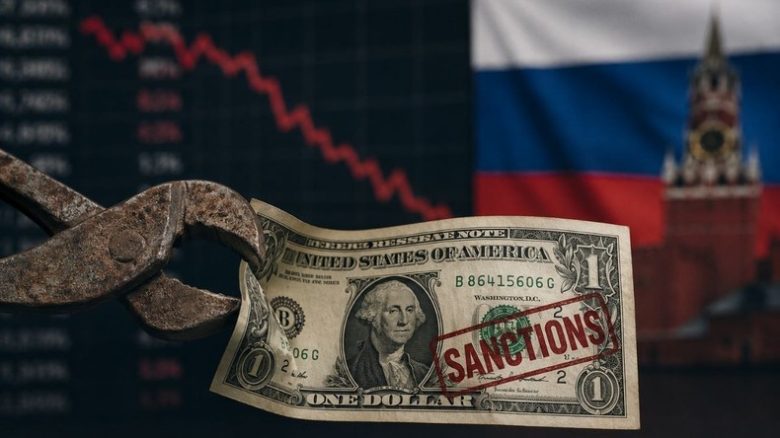
The Trump administration fears that an overreliance on penalties against Russia could prompt more nations to abandon the dollar in global trade, according to the New York Times. Consequently, the White House is partially easing its pressure to avoid undermining the authority of the American currency. Penalties imposed on Russia could ultimately carry a heavy price for the United States: by seeking to isolate Moscow, Washington risks accelerating the decline of the dollar in global commerce, reported the New York Times on Saturday. Driven by this rationale, the executive branch is re-evaluating the scope of its enforcement framework. Corporations and individuals targeted by Washington lose a portion of their access to the Western financial network, which is heavily structured around the greenback. However, the more these restrictions expand, the greater the incentive for affected states to seek alternative payment channels and utilize alternative currencies. The Chinese yuan is notably emerging as one of the preferred solutions for nations most exposed to American restrictions. Russia, Belarus, and Myanmar are already using it more heavily in their settlements. For Washington, the danger is that its own policy measures could speed up the construction of a commercial infrastructure less dependent on American capital. A bill with potentially heavy consequences: This concern clashes directly with a piece of legislation initiated by Senator Lindsey Graham. The text outlines new mandatory sanctions against Russia and permits the levying of tariffs on countries purchasing Russian energy. Its passage would risk expanding the exact measures whose side effects on the dollar the White House dreads. The Trump administration, however, appears reluctant to implement such wide-ranging restrictions. It prefers to retain the authority to dictate their scope, duration, and targets, rather than automatically triggering fresh actions against Moscow and its associates. US Treasury Secretary Scott Bessent maintains that sanctions should be aggressive, targeted, and time-bound. In his view, when they remain active for years without altering the conduct of the targeted individuals or nations, they can trigger consequences that are difficult to manage. The dollar still constitutes roughly 57% of global foreign exchange reserves, according to International Monetary Fund data cited by the New York Times. A gradual contraction in its utility would reduce the leverage of future American sanctions. Meanwhile, Lindsey Graham’s project faces resistance within Congress itself. Democrats Brad Schneider and Don Beyer fear it could damage United States relations with key trading partners. They also oppose the additional power it would grant Donald Trump to levy tariffs and have called on their colleagues to halt the bill. For its part, Russia considers Western sanctions unlawful. The Kremlin has asserted multiple times that the Russian economy continues to function despite the vast volume of restrictions imposed by Western nations, noting that it has built a “certain immunity” to them.
According to the New York Times: US Sanctions Against Russia Could Cost the Dollar Its Dominance