

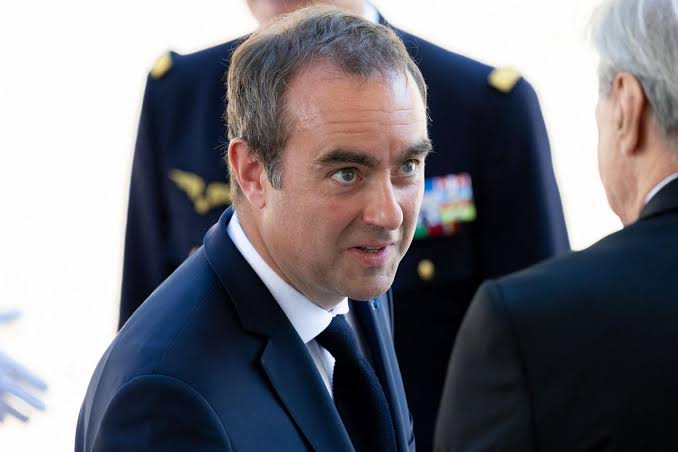
As French Prime Minister Sebastien Lecornu and a substantial government delegation conduct an official visit to Rabat, fresh and damning revelations are reigniting the Pegasus spyware controversy. A meticulous investigation, backed by unprecedented testimonies from within the Moroccan secret services, highlights the Kingdom’s direct role in the mass surveillance of political leaders, reporters, and activists. Confronted with undeniable material evidence, this controversy revives suspicions of geopolitical extortion, right at a time when both Paris and Madrid are granting major diplomatic concessions to the Alaouite sovereign.
The timing of this state visit could not be more awkward for the French Prime Minister and his governmental team currently traveling in Morocco. Recent inquiries led by Radio France journalists have just delivered a string of devastating proofs confirming Rabat’s direct and systematic participation in spying on top French officials—starting with Lecornu during his tenure as Minister of the Armed Forces from 2022 to 2025—alongside numerous prominent figures in the national media landscape. Given the mounting pile of these new physical elements that effectively corner the Moroccan authorities, it will now be extremely tough for Rabat to maintain its denial and dodge its accountability in this massive mass-espionage affair, executed both domestically and globally.
This large-scale probe, coordinated by the Forbidden Stories consortium, casts a harsh light on the industrial-scale monitoring network established by the Makhzen using Pegasus, the formidable spy software created by the Israeli company NSO. The primary goal of the Moroccan intelligence agencies was to neutralize and undermine independent journalists, intellectuals, political dissidents, as well as human rights advocates and Sahrawi activists through completely fabricated dossiers. However, the technological overreach went much further, expanding to target high-ranking political figures in France, Spain, and Algeria.
The findings of this recent collaborative investigation prove to be highly volatile, drawing on classified documents and exclusive accounts gathered straight from the core of the Moroccan security apparatus. Among these informants is a former operative of the General Directorate for Territorial Surveillance, the central intelligence branch of the Makhzen. This individual formally confirmed having witnessed, as early as 2017, the technical and operational rollout of this highly intrusive cyber weapon. These inside statements now leave no room for reasonable doubt.
The Emirati Connection
On a logistical and financial level, the investigation reveals that Rabat acquired this cybernetic weapon from the NSO group via a shell corporation entirely bankrolled by the United Arab Emirates. These documented proofs permanently shatter the official defense strategy of Morocco, which has consistently strived to deny purchasing this malicious software as well as any interception campaigns aimed at thousands of civilian and political targets.
Nevertheless, the official French response has remained notably subdued. When the scandal first broke in 2021, the French justice system did open a judicial inquiry, but it quickly bogged down and never reached a conclusion, hitting a brick wall due to the systematic refusal of Rabat and Tel Aviv to cooperate or respond to international letters rogatory. Technical audits, however, formally confirmed the presence of infection traces on the mobile phones of seven French ministers or former ministers, namely Sebastien Lecornu, Florence Parly, Jean-Michel Blanquer, Jacqueline Gourault, Francois de Rugy, Julien Denormandie, and Emmanuelle Wargon. By examining the smartphones of these officials, tech experts detected intrusion markers and network addresses strictly identical to those uncovered by the Amnesty International Security Lab on the devices of jailed Moroccan reporter Omar Radi or the Polisario Front envoy in Europe, Oubi Bachir Bouchraya.
This exceptionally severe interference initially sparked a massive diplomatic crisis and a memorable falling out between President Emmanuel Macron and King Mohammed VI, after the French head of state discovered his own phone was on the list of potential targets.
Yet, three years after this major diplomatic rift, the Elysee seems to have completely surrendered to the Makhzen. In a baffling political U-turn, Emmanuel Macron handed a historic and unexpected diplomatic victory to the Moroccan monarch by officially recognizing the Kingdom’s sovereignty over the disputed territory of Western Sahara.
This abrupt and dramatic reconciliation continues to puzzle international observers, many of whom detect the specter of state-level extortion. This sequence of events perfectly mirrors the political trajectory of Spanish Prime Minister Pedro Sanchez, who was also directly targeted and surveilled by Morocco via Pegasus. Following the infection of his device, Madrid executed a similar 180-degree pivot as Paris, aligning itself with Moroccan claims regarding the Western Sahara.
This disturbing capitulation prompted a sharp reaction from French attorney Joseph Breham, a long-time defender of Sahrawi activists and himself a victim of this spying software. He spoke bluntly, noting that France kneeling before Morocco leaves him absolutely astounded. He emphasized the complete illogicality of the French stance, expressing shock that a nation spying on France would receive such massive diplomatic concessions in return. The lawyer openly questioned the nature of the sensitive data the Moroccan intelligence might have intercepted, concluding grimly that Morocco currently holds tremendously strong leverage and intimidation power over the French Republic.