

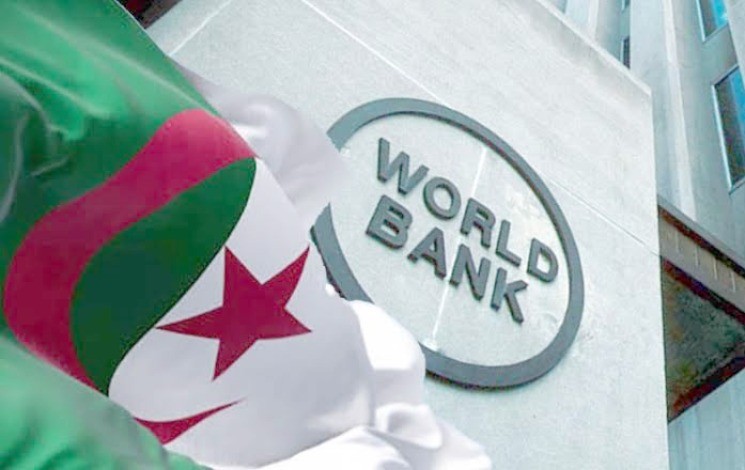
For the third consecutive year, Algeria has secured its position within the upper-middle-income country category. This achievement highlights the economic strides made by the nation over recent years regarding growth, public capital injections, and enhanced governance of state finances, according to the latest index issued by the World Bank Group.
In its publication, the global financial agency notes that this categorization relies on an analysis of Gross National Income (GNI) per capita evaluated across 218 economies for the 2025 fiscal cycle.
Algeria now stands alongside seven other African countries in the higher tier of middle-income economies. With a gross national income per capita climbing to 5,850 dollars last year (up from 5,370 dollars in 2024), Algeria and Libya—despite the latter’s ongoing structural instability—are the solitary North African nations featured in this upper-middle-income bracket.
Algeria initially advanced to this specific classification tier in 2024, migrating upward from the lower-middle-income bracket.
At the time, the Ministry of Finance explained that this upward shift reflected not only a comprehensive rebasing of the Gross Domestic Product (GDP) that adjusted the overall economic volume upward, but also several structural elements. These components include solid growth numbers logged in recent years, broader public sector investment, the fortification of productive economic fields, and the reinforcement of sound fiscal management.
The World Bank designates low-income economies as those with a per capita national income of 1,175 dollars or less in 2026. Lower-middle-income countries sit between 1,176 and 4,635 dollars, whereas upper-middle-income economies encompass those with a GNI per capita ranging from 4,496 to 13,935 dollars. Any nation exceeding this boundary is classified as a high-income country.
Algeria thus sustains its upward economic momentum, a trend corroborated by various international financial reports. Last week, this reality was validated by the International Monetary Fund (IMF). Following its diagnostic mission to Algiers for the 2026 consultations, the IMF highlighted the robustness of domestic growth, stable short-term outlooks, and ongoing structural initiatives to diversify the economy and balance financial accounts.
The Washington-based institution commended Algeria’s structural diversification campaign, specifically pointing to progress in the mining and agricultural sectors, while urging the continuation of reforms designed to bolster business competitiveness and private investments.
Furthermore, the IMF praised Algeria’s recent removal from the FATF gray list, describing it as a major breakthrough that demonstrates strong institutional resolve, while encouraging the country to persist with its regulatory reform roadmap.