

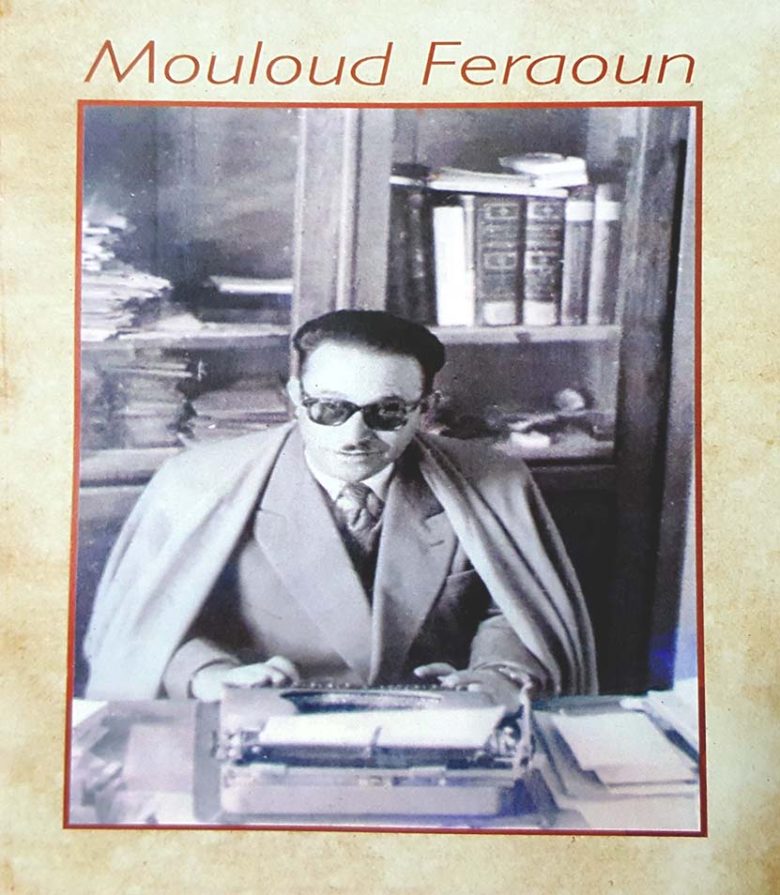
Five weeks prior to national liberation, Mouloud Feraoun believed he was witnessing the dawn of the war’s conclusion. Within his personal records, the author of The Poor Man’s Son documented the atrocities of the OAS with striking clarity while maintaining his aspirations for a sovereign nation. On February 5, 1962, he penned these words, which would prove chillingly prophetic: “The Algerian war is drawing to a close… Long live liberty!”. Ten days afterward, the literary figure was assassinated by an OAS hit squad, occurring just three days before the signing of the Evian Accords—rendering his fate a tragic symbol of a freedom he never survived to experience.
The long-awaited resolution to the conflict was something he passionately anticipated. He looked forward to freedom, eager for the country to step into a new era. For two years, influenced by a timeline filled with near-daily threats and devastating casualty counts, his writings denounced the OAS and its scorched-earth tactics. Keeping a steady pace of one entry per day, the brilliant alumnus of the Bouzareah normal school maintained a record intended for eventual publication.
Following a routine he frequently adopted since returning to office in May 1958, General de Gaulle was scheduled for a television appearance on Friday, February 5, 1962. It was yet another televised address directed at the French public. What would the General announce? Much like Mouloud Feraoun, the Algerian population—lacking televisions at the time—tuned in to their radios and awaited the newspapers hitting the stands the following morning.
The head of state’s speech focused on his mid-term assessment and the roadmap leading up to 1965, the conclusion of his seven-year term. Inevitably, the Algerian question would take center stage, as negotiators from both sides prepared to gather in Les Rousses for their initial official summit spanning February 11 to 18. The creator of the celebrated trilogy published by Seuil—The Poor Man’s Son (1950), Land and Blood (1953), and The Upward Paths (1957)—picked up his pen to document his impressions of the day.
In contrast to his previous commentary, the thoughts recorded on February 5, 1962, are brief. Three paragraphs, nothing more. Moving past basic observations—capturing the current mood and delivering a sharp critique of a highly aggressive OAS—the Tizi Hibel native mentally projected himself into the immediate future: an Algerian spring unfolding right on the horizon.
Peace to the Survivors
“De Gaulle,” he observed, “is set to speak to announce that the end of the Algerian war is very near. How many more victims will this imminent conclusion claim? These days, the OAS reportedly strikes without warning, killing via cars, motorcycles, grenades, gunfire, and blades. They raid bank vaults, post offices, and businesses—a crime drama sequence executed with the collusion of some and the cowardice of everyone else (…) The Algerian war is drawing to a close. Peace to the departed. Peace to the survivors. Let the terror stop. Long live liberty!”. By choosing to emphasize “long live liberty” with an exclamation mark, the author did more than just conclude his thoughts with standard punctuation. He utilized the most expressive mark available to demonstrate just how deeply he treasured independence and human freedom.
Clearly, the inspector of the social educational centers network—programs initiated by anthropologist Germaine Tillon—was anticipating the taste of independence. In a cruel twist of fate, he would never experience it. When he inscribed those words on the penultimate page of his text, as Benjamin Stora and journalist-writer Renaud de Rochebrune point out in The Algerian War as Seen by Algerians (Denoel, 2016), Feraoun remained unaware that five weeks later, he would no longer count among the survivors.
On March 15, 1962, he was gunned down by the OAS. Operating with a targeted list, an armed squad stormed the Chateau-Royal facility in Ben-Aknoun around 10:30 AM, where the social centers headquarters operated alongside a school for young girls. “Fouroulou” was brutally executed alongside five of his close colleagues and fellow inspectors: Jean-Philippe Ould Aoudia, Ali Hamoutene, Max Marchand (the director of the network), Marcel Basset, and Robert Eymard. The iconic author and his peers were taken just three days prior to the Evian treaty signing, four days before the ceasefire went into effect, and 112 days before independence day arrived.
The Poor Man’s Son
Jean Amrouche, who succumbed to a protracted illness a month and two days after the shocking murders at Chateau-Royal, was the first to speak out. Exhausted by failing health despite his relatively young age of 56, the son of Fatma Ait Mansour Amrouche and brother of Taos struggled to contain his grief over losing his younger contemporary. “I only knew him through his literature, particularly The Poor Man’s Son, which will undoubtedly stand as a classic of Algerian literature written in French. We certainly held different ideological frameworks and standards of judgment regarding life and existence. Yet he was a son of my homeland, shaped like all Kabyles by the strict principles of the Nisf tradition (…)
The OAS, driven entirely by hatred, aimed straight for the heart of hope when they assassinated Mouloud Feraoun. However, hope cannot be destroyed. Now, the testimony of Feraoun, offered up for the emerging nation, will take on its full meaning and profound reach: Frenchmen and Algerians who labored together in a shared pursuit of enlightenment and human fellowship perished together, targeted by the same extremist adversary, and for what the latter deemed the identical offense: advocating for a liberated individual, proud to speak their true name, overjoyed to possess a homeland, and confident in a future where any poor man’s son can find the opportunity to fulfill a great destiny.”
It was the writer Emmanuel Robles (Oran 1914-Paris 1995) who initially prompted Mouloud Feraoun to record his observations in a journal format. Arriving from Kabylia, the author of The Poor Man’s Son was managing a school in Clos Salembier (El Madania). Emmanuel Robles resided in a neighboring district. “He was a brilliant storyteller, and we could spend entire nights listening to him speak. From the very start of the uprising, he shared so many accounts and personal stories that I strongly urged him to write them down.
It felt genuinely unfortunate to me that such a rich archive might be lost. I eventually persuaded Feraoun, who adopted this routine primarily with the intention of utilizing these recollections for a more structured project down the road.” The opening reflection of the Journal is dated November 1, 1955. When Feraoun submitted the pages to Seuil, the entry from February 5, 1962, with its declaration of “Long live liberty,” stood as the conclusion of that collection. Emmanuel Robles later discovered four additional entries—the absolute final ones—among Feraoun’s belongings. They were marked February 28, March 2, March 9, and March 14. He personally delivered them to Seuil alongside an introductory essay. The Journal was published that autumn.
“How painful it is to speak of him now that he is gone! And frankly, what profile could better represent him than the one emerging from these very pages?” Robles wrote. “Indeed, here he is exactly as he was: patient, generous, determined, entirely shaped by the values of those Kabylia highlanders who cherished honor and equity. Here he is with his profound human warmth, his faith in humanity, alongside the frustrations and internal conflicts he shared with me during every meeting and in every piece of mail, which mirrored my own so perfectly.” As a safety measure, Robles explained, Mouloud Feraoun composed his entries “in ordinary school notebooks that he mixed in with his students’ homework assignments.”
“He was well aware of the simplicity of this deception. He had plenty of reasons to be cautious, just like all the intellectuals of that era who lived under the constant threat of searches. There were times he handed over some of these notebooks to me, selecting the ones he felt were most dangerous. I hid them out in my garden alongside my own papers, since I was active in the Espoir-Algerie committee back then and authorities were monitoring me as well. Then came the initial threatening correspondence for Feraoun, just as it did for the rest of us.”
Starting in 1956, the author became increasingly eager to contribute to the battle of ideas and offer his perspective. This drive, Emmanuel Robles noted, “simultaneously gave him the idea to publish his Journal, though the team at Seuil hesitated, fearing that such a release—at a moment when hostilities were reaching an absolute peak—might trigger violent retaliation against the writer.
Because I shared those exact worries, Feraoun wrote back to insist: ‘If it does not come out right now, I will be accused of cowardice later on, and in that case, it would be better if it never sees the light of day.’ When he dispatched that letter, death was already standing incredibly close to him, watching, like those old folk tales where it awaits some unknown, mysterious cue. He possessed such a clear premonition of this that on March 14, before concluding the evening with his son Ali, he guided his wife to the back of the garden to give her his most urgent instructions should tragedy strike.”