

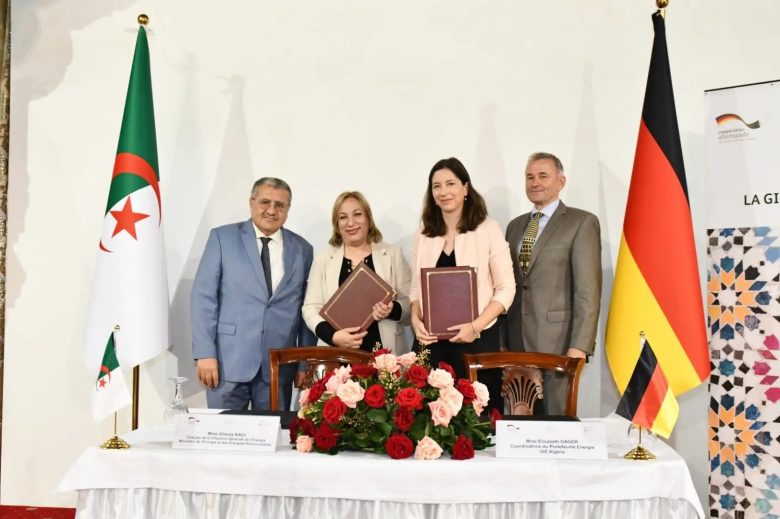
The Ministry of Energy and Renewable Energies and the German Agency for International Cooperation (GIZ) have sealed a partnership for the implementation of the “DigiEnR” project, which is dedicated to automating the integration of renewable energy into the national electricity grid.
A formal agreement was signed between the two parties on Tuesday during a project planning workshop. According to official briefings, this venture aims to support Algeria’s efforts to bolster the integration of green energy into the domestic power grid. It plans to do this through the development of digital solutions engineered for grid management, the optimization of energy planning, and the upgrading of infrastructure to accommodate expanding renewable energy capacities.
The signing ceremony took place in the presence of the Secretary-General of the Ministry of Energy and Renewable Energies, the Ambassador of the Federal Republic of Germany to Algeria, and executives from several key domestic institutions—including the Sonelgaz group, the Electricity and Gas Regulatory Commission (CREG), and the High Commissioner for Digitization.
This initiative fits into the broader strengthening of Algerian-German cooperation within the energy sector, specifically targeting digitization, the modernization of electrical networks, knowledge sharing, and the building of technical and institutional capabilities.
Consequently, the DigiEnR project will assist in modernizing the Algerian power grid and creating the necessary conditions for a higher utilization of renewable energy.
Funded by the German Federal Ministry for Economic Cooperation and Development and executed by GIZ, the project operates under the bilateral energy partnership between Algeria and Germany, playing a role in establishing a modern, efficient, and sustainable energy system.
Beyond the DigiEnR project, Algeria and Germany are progressively expanding their strategic alliance in renewable energies and green hydrogen, with the goal of backing the Algerian energy transition while simultaneously helping secure the European energy supply.
This cooperation relies on several major pillars.
In the fields of green hydrogen and ammonia, the two nations are advancing partnerships aimed at establishing production infrastructure and promoting hydrogen exports to Europe via the SouthH2 Corridor. Within this framework, a memorandum of understanding was notably signed between Sonatrach and the German group VNG AG to build a 50 MW pilot plant.
The partnership also leverages the TaqatHy+ program, funded by the European Union and Germany through 2029, which assists Algerian authorities in deploying clean energy and developing the hydrogen sector.
In addition, Germany provides technical support for Algerian solar and wind ventures. Gifted with one of the largest solar potentials in the world, Algeria continues to pursue large-scale developments intended to accelerate the diversification of its energy mix and boost its electricity generation from renewable sources.