

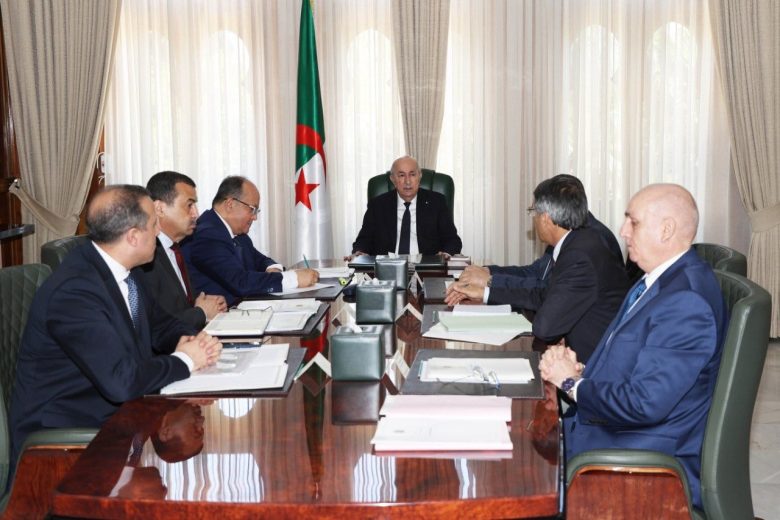
Major initiatives undertaken by Algeria to expand infrastructure and logistics, structural ventures within the energy sector, and the strengthening of geographical and economic pathways toward the African continent topped the agenda of a restricted working session chaired by the President of the Republic, who aims to accelerate the execution of these strategic assets. According to international economic development consultant Abderrahmane Hadef, Algeria has committed to a high-value-added economic model driven by resource optimization and the construction of a comprehensive logistics network via structural ventures.
In the presence of the Prime Minister, the State Minister for the General Inspection of State Services and Local Authorities, the State Minister for Energy, the Minister of Finance, the Governor of the Bank of Algeria, and the CEO of the Sonatrach Group, the President of the Republic reviewed these strategic files on Sunday. This oversight demonstrates his deep focus and continuous monitoring of these operations, given the significant momentum they inject into the national economy.
The working session focused heavily on the phosphate fertilizer production complex project, alongside the integrated phosphate initiative for producing ammonia, urea, and phosphate-nitrogen fertilizers. This mega-venture is slated to begin production during the first quarter of 2027, coinciding with the completion of the Annaba port expansion, which will be fully prepared to export its initial phosphate shipments during the same period.
Financing for the Algiers–Tamanrasset railway project was also examined during the briefing, culminating in a directive to launch construction by September at the latest across three major infrastructure zones. The first involves the Ouargla–In Salah section, the second connects In Salah to Tamanrasset, and the third links Tamanrasset to In Salah.
Hadef noted that by materializing these strategic programs, Algeria is transitioning toward a high-value-added economy built on optimizing natural endowments and establishing robust logistics through foundational ventures. He argued that the strategy goes beyond merely exploiting raw resources; it focuses on redesigning national value chains and embedding them within an industrial and logistics network capable of driving market competitiveness and generating high returns.
Phosphate Fertilizers, a Highly Strategic Frontier
In an analysis of the structural projects review, Hadef highlighted the economic scope of these developments, particularly fertilizer production. The phosphate fertilizer complex and the integrated venture targeting ammonia, urea, and nitrogen-based variations stand out as core pillars of this structural transformation.
The relevance of these developments is further amplified, he noted, by global fertilizer market dynamics in 2026, which are characterized by significant price hikes stemming from supply chain disruptions, geopolitical frictions, and rising energy expenses.
This operating landscape directly elevates the financial viability of Algerian operations and their potential to yield substantial export revenue, while improving the non-hydrocarbon trade balance. The economic consultant emphasized that the commitment to commission the integrated phosphate framework by the first quarter of 2027, parallel to finishing the Annaba port expansion, mirrors a strategy based on aligning industrial manufacturing with export logistics.
“This synergy aims to lower logistics costs, which represent a significant expense bracket in the fertilizer industry, thereby boosting the competitiveness of Algerian exports on international markets,” Hadef observed.
Furthermore, the domestic and continental implications of the Algiers–Tamanrasset railway line were emphasized by the consultant, who views it as more than a mere transit network; it serves as an instrument for domestic economic rebalancing.
The rail link seeks to connect the Deep South with northern economic hubs and maritime gateways, effectively “unlocking new economic corridors and mitigating isolation for areas rich in mining and energy potential.” He additionally pointed out the regional dimension of this infrastructure, which “could emerge as a strategic gateway to the Sahel and Central African states.” This asset is positioned to stimulate trade flows and secure Algeria’s standing as a continental logistics platform, alongside the social dividends generated by such an endeavor.