

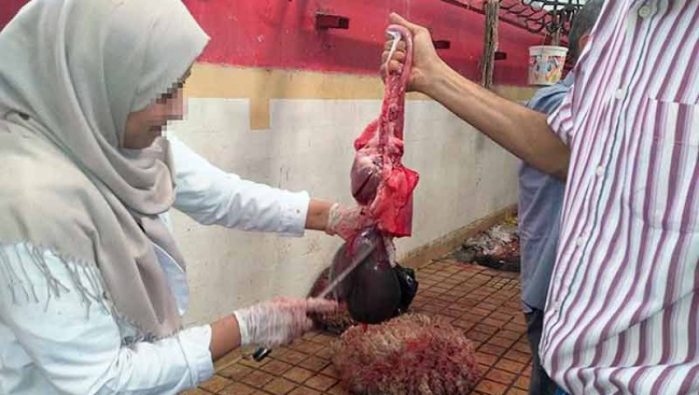
On the eve of Eid al-Adha, the Ministry of Health launched, on Saturday, an information and public awareness campaign under the framework of the national framework for the prevention and control of zoonotic diseases. This initiative aims to alert the general public to the risks associated with hydatidosis, commonly known as hydatid cyst, a disease whose transmission can be amplified during this specific festive period.
According to a ministry statement, this parasitic illness is triggered by the larval stage of a tapeworm known as Echinococcus granulosus, presenting a significant public health challenge.
The hydatid cyst develops within humans, predominantly targeting the liver or lungs, the report noted, adding that it remains largely asymptomatic in its initial phases and is frequently diagnosed only at an advanced stage when complications surface. At this juncture, heavy and intricate surgical intervention is often required.
According to the same source, “the Eid al-Adha period is particularly conducive to the spread of this disease,” due to the ritual livestock slaughter and the handling of offal, which increases exposure risks if specific safety protocols are neglected. Consequently, the ministry urgently advises having the sacrificed livestock inspected by a veterinarian. This assessment helps identify the potential presence of cysts and mitigates the health hazards linked to handling or consuming visceral organs.
If a veterinary inspection is unavailable, citizens are urged to carefully examine the offal (liver, lungs) and other internal organs for any fluid-filled vesicles or “water blisters” that could indicate infection. If such symptoms are detected, several measures must be strictly followed according to the regulatory authority: boil or incinerate the contaminated organs, or bury them deeply—at least 50 centimeters underground—to ensure stray dogs cannot access them.
Furthermore, it is strictly advised never to discard these organic wastes in open environments, throw them out with household garbage, or feed them to dogs, whether domestic pets or strays, as these animals serve as primary hosts for the parasite.
Regarding personal hygiene, health officials emphasized the necessity of thoroughly washing hands before meals and after any physical contact with dogs to minimize transmission vectors.
The campaign also incorporates practical recommendations to prevent domestic accidents during the holidays. This includes securing gas cylinders, keeping children away from traditional outdoor gas stoves (tabounas), and exercising extreme caution when handling sharp tools like knives and cleavers.
It is worth noting that the Ministry of Health confirmed that during the Eid al-Adha celebrations, community clinics as well as all major hospital facilities will remain fully operational and available to address the medical needs of the population.