

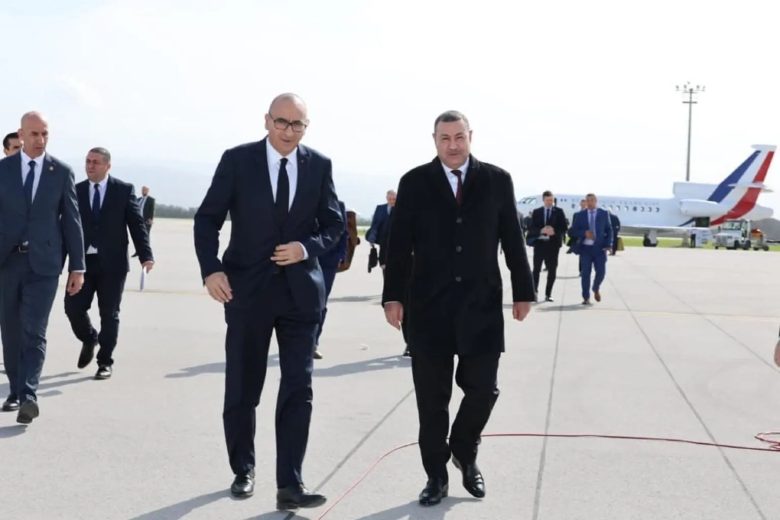
Following months of diplomatic turbulence, the restoration of dialogue between France and Algeria is moving down a pragmatic path. Interior Minister Saïd Sayoud is expected to travel to Paris in the coming days, according to his French counterpart, a rapprochement that signals the collapse of the confrontational stance previously taken with a partner now deemed indispensable.
In an exclusive statement provided to the weekly publication La Tribune Dimanche, Mr. Nuñez did not merely formalize this major visit. He categorized it as a “highly encouraging sign,” openly acknowledging Algeria’s strategic weight within the realms of security and intelligence.
These remarks come amid a bilateral easing of tensions, following more than eighteen months of severe diplomatic friction. They read like a rejection of extremist and anti-Algerian factions working to deepen a political divide across the Mediterranean for electoral gain. The aggressive strategy championed by his predecessor, Bruno Retailleau—and influenced by former ambassador to Algiers Xavier Driencourt—appears to be fracturing when faced with positions that prioritize realism and pragmatism.
The head of Place Beauvau told the newspaper that he would host his Algerian counterpart shortly. “This is an incredibly positive indicator. Cooperation on security matters is being rebuilt step by step,” the minister emphasized.
When questioned about the “power struggle” approach launched by the previous cabinet, Laurent Nuñez was direct, framing Algeria as an essential partner. “When dealing with safety and immigration issues, we are bound to communicate with Algeria,” he noted.
After reiterating that Algeria is “a major nation with extensive expertise in intelligence and defense,” the French minister remarked that dialogue with Algiers was not optional but “vital,” praising Algerian capability in these sensitive sectors.
On another note, the minister highlighted the depth of human connections, asserting that “millions of individuals on both sides of the Mediterranean are directly impacted by the quality of the bond between our two nations.” By pointing to this human and historical interdependence, Mr. Nuñez clearly targeted supporters of the Retailleau doctrine, stating that those attempting to alienate Algeria “are not focusing on France’s interests, but rather on short-term political maneuvering and electoral advantages.” This delivers a potent political message on the necessity of sustaining stable interactions while avoiding any friction detrimental to both populations.
As a reminder, Mr. Nuñez conducted what was deemed a “successful” visit to Algiers in mid-February at the invitation of his Algerian peer. That trip paved the way to restart French-Algerian relations after several months of widespread deadlock. In its wake, cooperation regarding migration and security issues resumed, laying the groundwork for a genuine thaw.
This warming trend is visible today. Evidence includes the recent trip to Algeria by Alice Rufo, Minister Delegate to the Minister of the Armed Forces, who made a significant commemorative gesture in Sétif by attending the remembrance of the May 8, 1945 massacres. Furthermore, the return of French Ambassador Stéphane Romatet to his post confirms a shared desire to stabilize bilateral ties.
Within this same momentum, French Justice Minister Gérald Darmanin is now projected to visit Algiers leading a high-level delegation. During his talks with Algerian officials, discussions will center on judicial cooperation, specifically regarding the fight against organized crime, drug trafficking, terrorism, and transnational financial offenses—including cases involving illicitly acquired assets and funds embezzled to France by the former “issaba” regime. Other highly sensitive matters are also expected on the agenda, such as the situation of the Algerian consular official imprisoned for over a year in France, whose pre-trial detention was recently extended for another twelve months.