

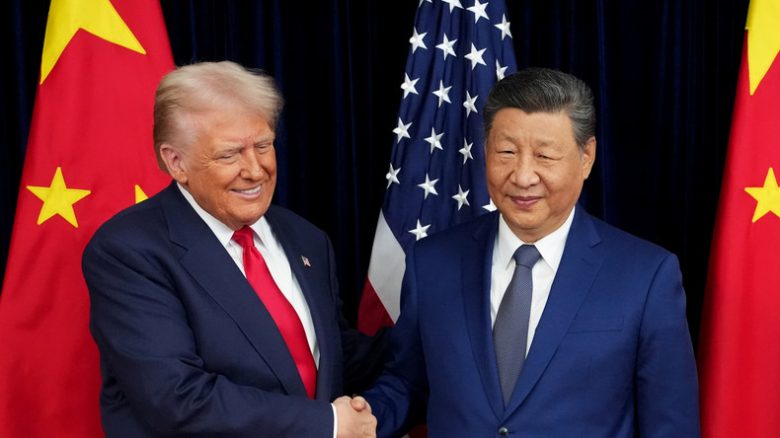
Donald Trump and Xi Jinping demonstrated a mutual desire for cooperation in Beijing, despite lingering geopolitical friction. Taiwan and Iran remain the primary strategic flashpoints of a summit where Washington and Beijing are focused above all on preventing their rivalry from escalating into open conflict. Chinese President Xi Jinping welcomed Donald Trump to Beijing this Thursday with meticulous protocol before the two leaders tackled the core points of contention dividing their nations, ranging from global trade to Iran and Taiwan. From the start of the talks, Trump highlighted his personal rapport with his Chinese counterpart, characterizing it as a decisive factor. “It is an honor to be with you. It is an honor to be your friend,” the US president remarked, asserting that “relations between China and the United States are going to be better than ever” while forecasting a “fabulous future.” China rolled out a lavish reception for this first visit by an American president since 2017. Xi Jinping notably arranged a formal banquet to honor his counterpart, followed by more informal meetings. Yet behind the diplomatic pageantry, profound disagreements persist on strategic issues.
Taiwan and Iran at the Center of Friction
On the geopolitical front, the question of Taiwan continues to be one of the main sources of instability. Xi Jinping warned that China and the United States could slide into “conflict” if Washington mishandles this sensitive matter. Beijing views the island as a Chinese province and refuses to rule out the use of force to achieve reunification. Another major focal point is Iran and the broader Middle East. The two leaders discussed international crises at a time when Washington is seeking to pressure Beijing into leveraging its influence over Tehran. Secretary of State Marco Rubio emphasized that the United States hopes China will “play a more active role in getting Iran to cease what it is currently doing.” In this context, Donald Trump confirmed his intention to address the Iranian issue directly with Xi Jinping, anticipating “a lengthy conversation” regarding regional stability. As the top buyer of Iranian oil, Beijing finds itself at the very center of these diplomatic dynamics. Xi Jinping, for his part, maintained a more institutional tone, calling for an end to the logic of confrontation: “We must be partners, not rivals,” he asserted, suggesting they “tackle global challenges” in unison and avoid a prolonged showdown between the two superpowers.