

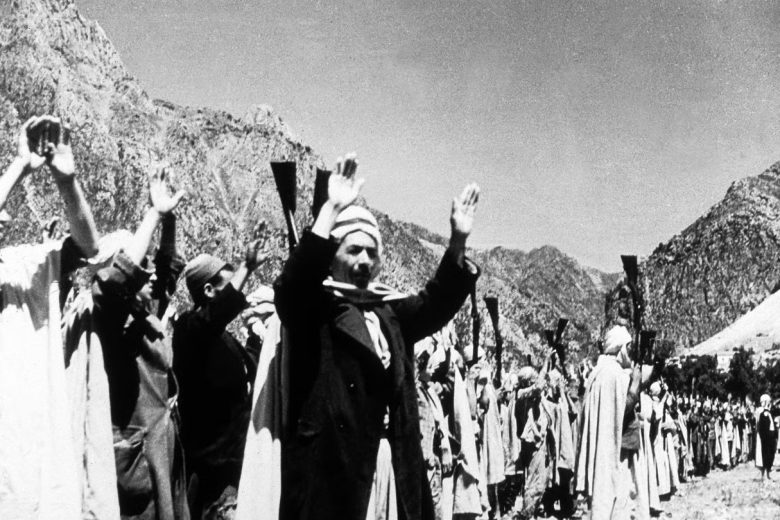
Razed villages, armed militias, understated tolls: 1945 British diplomatic correspondence unveils North-Constantinois bloody crackdown. Intelligence notes, summaries—unearthed by researchers François Malye and Kathryn Hadley—deliver sharp counter to revisionists, exposing colonial violence London foresaw.
Sequel to “Indigènes”—tribute to Algerian riflemen’s Nazi-fascist defeat role—”Hors-la-loi” competed officially at 63rd Cannes (May 12-23, 2010). Enough for Lionnel Luca—”nostalgeria” politico—to crusade against film.
October 2009: Valeurs actuelles—”uncomplexed” right, far-right tribune—alerted Luca to Rachid Bouchareb’s Sétif-bloody-events segment. “Feared France repping at Cannes,” deputy told Le Monde pre-opening. “Bouchareb vows truth—which? Repression disproportionate, sure. But May 8 first Europeans massacred,” revisionist claim. Outraged over 2h15 fiction’s six Sétif minutes.
Valeurs actuelles—nostalgeria media outpost—echoed Luca, similars like “Vérité Histoire – Cannes 2010” collective. Site near far-right called Croisette protest: “sabotage” Festival.
Four months post-projection, “polémique fizzled,” Le Point extended debate. Charge piece “Hors-la-loi Bomb” aside—not yet today’s Algeria stance—published Malye-Hadley “Sétif, Unpublished Archives.”
Malye: in-house investigative history; co-authored 2010 Benjamin Stora “François Mitterrand and Algerian War” (Calmann-Lévy). Hadley: Oxford history agrégée, History Today (UK’s oldest history mag). Solicited for Foreign Office diplomats’ Sétif view. Finalized “In British Archives’ Secret” (Calmann-Lévy, 2012)—France history via English eyes 1940-1981.
Years mining National Archives: thousands ambassadors’, diplomats’, spies’ notes/telegrams worldwide. Day-by-day French actuality, colonies included. “Unpublished documents,” publisher stresses. First alternate Franco-Algerian history lens, authors note.
Key: Alger consul-general John Carvell cables to Paris ambassador Duff Cooper, London Foreign Office.
———–French Cop Lost Head
May 23, 1945, handwritten synthesis note—first light on events. “Revolt”—his term—accusatory causes. Verbatim: “French cop lost head. Certain less blood spilled sans impatient French military massacre urge.” Adds: “French admin sorely tested, fared poorly… Don’t manage native unrest”—force, bloody repression nod.
Per Malye-Hadley, May 23 draws military British, unofficial French intel. Manifestation celebrating war end: “highly disciplined” unarmed Algerians—AML, clandestine PPA instructions followed. “Controlled police cortege reached 44th South African air army Company A office; cop grabbed ‘Free Messali Hadj’ banner. Brawl; cop shot native dead. More shots—police, balcony French civilians.” Confirms later historians’ militias. “Indescribable chaos; French-native fusillade indiscriminate; unarmed natives grabbed chairs, anything; attacks regardless race, color, creed.”
Prior note: East troubles predictable to Foreign Office. February 9, 1945—three months pre-repression—Carvell cables Paris chancery, London. Predicts unrest “soon British-American troops leave Algeria.” Accompanies US military intel officer report.
Paraphrased: Arab nationalist activism amid world war fallout—socio-economic indigene plight, settler attitudes, education-health-food-clothing lacks, black market chaos, labor shortages. “Chief nationalist rise cause: Arab exploitation-discrimination… French view: Arabs inferior race, habits bar European gov-econ norms.”
Carvell concludes “genuine Muslim discontent Algeria-wide.” Warns “minor troubles from discontent coming months.”
“Authorities immediate harsh countermeasures—machine-gunning, bombings… Air recon: whole villages destroyed,” Carvell notes. Near 300 sorties. “Governor-general: 900-1,000 dead; French medics: at least 6,000 dead, 14,000 wounded. Others far higher… Exact figures unknowable”—official tallies far short