

Algeria is advancing its strategy to solidify its central role on regional and global stages. With the European Union, Algiers holds an indispensable partnership across key sectors, signaling a firm political intent to inject more momentum, smoothness, and balance into relations between the two sides.
These ties are framed by an association agreement in effect since 2005, which Algiers seeks to update amid the country’s economic growth and advances in industry and agriculture. The pact originally emphasized a strategic energy alliance, as Algeria has proven a dependable natural gas supplier, bolstering Europe’s energy security amid geopolitical and economic strains.
Yet, trade imbalances have emerged over time, disadvantaging Algeria—once the EU’s top trading partner—and prompting calls to overhaul the agreement’s terms. Algerian analysts argue it overly favors Europe and hampers economic diversification efforts. Consequently, the EU has pursued arbitration, claiming Algeria’s import curbs on European goods violate pact clauses.
This dispute burdens trade balances, fueling tough negotiations and consultations between the parties in recent months.
The EU’s “Mediterranean Pact,” unveiled in October 2025, aims to deepen ties through a stability- and development-focused approach with southern shore nations, tackling economic collaboration, regional security, irregular migration, and counterterrorism.
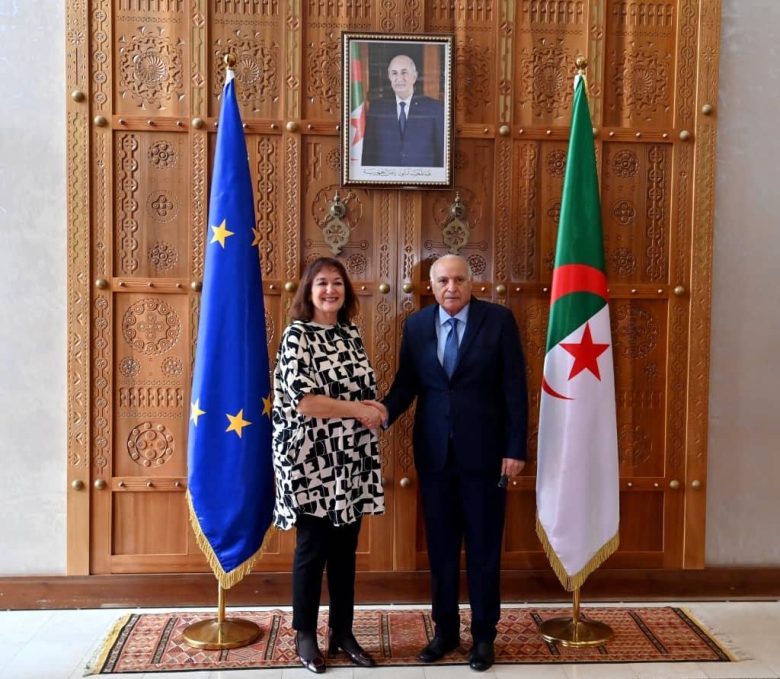
This backdrop frames European Commissioner for the Mediterranean Dubravka Šuica’s visit to Algiers. Following talks with State Minister for Hydrocarbons Mohamed Arkab—who urged European firms to ramp up investments in Algeria’s energy market—she met State Minister for Foreign Affairs Ahmed Attaf.
A ministry statement noted the session enabled a broad review of the Algeria-EU partnership’s facets. Both sides explored ways to enhance its vitality, fluidity, and equity, in line with the “Pact for the Mediterranean” goals.
Talks zeroed in on vital areas like investment, trade, energy, green economy, higher education, and people-to-people mobility.
The meeting also tackled pressing Mediterranean development and security hurdles. Officials stressed the need for tighter joint coordination to deliver effective, lasting responses.