

Algerian President Abdelmadjid Tebboune reviewed the achievements and outlook for the nation’s economy, which is steadily breaking free from its reliance on hydrocarbons through growth in diverse sectors. The head of state has outlined the next phase: launching a profound economic shift.
The domestic economy is thriving and poised for further expansion to meet established targets. The key challenge now lies in sustaining this upward momentum, as highlighted in Tebboune’s recent remarks on the country’s economic standing during his periodic media briefing, aired Friday evening. Algeria has reached an irreversible stage of progress, the president declared, pointing to robust development metrics across the national economy. To build on this, efforts must focus on economic diversification and boosting non-hydrocarbon exports.
Tebboune described the forthcoming phase as establishing a “genuine economic transformation,” centered on leveraging non-hydrocarbon national resources—particularly via processing industries, higher value addition, and job generation.
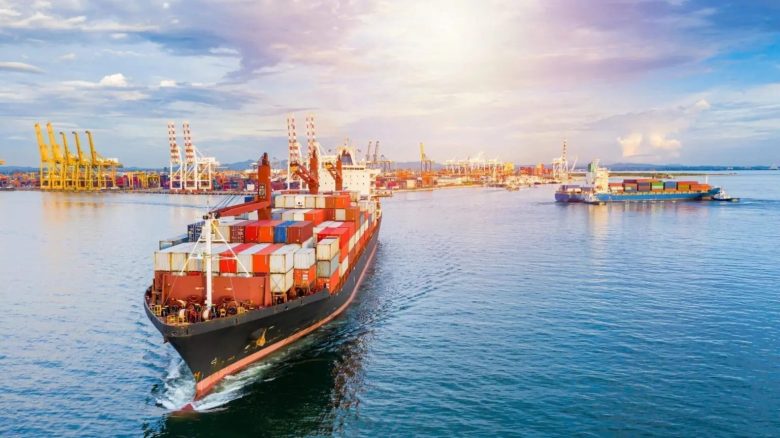
Spotlighting strides in economic diversification, he noted that what was once “a mere slogan for decades” has become tangible reality. Several industrial sectors now boast strong competitiveness, fueling a surge in non-hydrocarbon exports, with ambitions to hit $8-9 billion annually. He also pointed to rising global demand for Algerian goods, including household appliances, steel products, and agro-food items.
Pivotal sectors driving non-hydrocarbon exports
Praising the Algerian Economic Renewal Council’s (CREA) goal of nearly $30 billion in non-hydrocarbon exports by 2030, Tebboune credited recent gains in domestic industrial competitiveness for propelling these shipments.
This export growth mirrors advances in local production, the president emphasized. “Just a few years ago, Algeria imported rebar; today, it exports it,” he recalled, while noting plans to launch new industrial facilities.
Tebboune hailed progress in the automotive sector, especially following the opening of a stamping unit in Batna province, alongside advances in producing various auto parts. Fiat Algeria’s plant will soon achieve 40% local integration, with an eye toward exports. The agro-food industry stands out too, enjoying high demand worldwide, he added, with a share of output earmarked for overseas markets.
Untapped mineral reserves set for development
Tebboune, who noted financial sector reforms and the phased rollout of electronic payments, turned to major mining initiatives, stressing that true growth hinges on wealth and jobs beyond hydrocarbons.
A core principle, he said, is avoiding raw mineral exports—instead processing them domestically, whether phosphate, iron, zinc, or farm goods—to generate value and bolster industry.
He revealed additional untapped mineral deposits beyond current sites, to be developed “at the right time,” positioning Algeria as “a job-creating nation outside hydrocarbons.” The country holds “countless” such reserves, he said, to be mined later under a dedicated ministry of experts. Tebboune highlighted projects like Bled El-Hadba for their socioeconomic impact.
The phosphate push goes beyond extraction alone; an integrated effort in the east is advancing, with the phosphoric acid plant slated to start by late 2026 or early 2027 for full-cycle processing.
In the media session, Tebboune confirmed ongoing hydrocarbon exploration to ramp up output, while preparing for future demographic shifts. Algeria is advancing major energy projects, including offshore drilling and southern province developments.