

As Algeria’s July 2 legislative elections approach, major political groups are ramping up efforts, honing their core messages. Balancing internal unity, voter appeal, and firm backing for President Abdelmadjid Tebboune’s agenda, the National Liberation Front (FLN), National Democratic Rally (RND), and El-Bina Movement are waging a multifaceted campaign—electoral, institutional, and tactical.
From Ksar Chellala, FLN Secretary-General Abdelkrim Benmbarek centered his rally on the vote, declaring his party “fully prepared” for the July 2 showdown. He stressed a disciplined, structured buildup, signaling broad mobilization and resolve. Benmbarek highlighted deep internal reforms—framed as an organizational overhaul to boost party cohesion—stemming from the last congress, aimed at streamlining operations and fieldwork.
He spotlighted candidate selection as pivotal, vowing FLN lists built on expertise, honesty, and dedication, with slots for youth, women, and national talent. “This isn’t just about winning seats,” he said, “but earning public trust and true representation.”
Politically, Benmbarek doubled down on alignment with Tebboune’s platform, positioning the FLN as a steadfast ally in economic, social, and institutional overhauls, while praising state advances in social justice and governance.
RND Bets on a Strong Comeback
RND Secretary-General Monder Bouden took a bolder tack, dubbing the 2026 polls a “historic pivot” that could reshape political balances amid expanding public discourse and consultation mechanisms.
The RND eyes a return to institutional prominence, with Bouden asserting ambitions to reclaim a “central role” as the president’s top political partner, sketching a bid to anchor the presidential majority.
This drive rests on grassroots momentum: active presence in 39 provinces signals a nationwide revival to rebuild networks and local roots—a “unprecedented” push, per Bouden.
Candidate quality is key, with the RND prioritizing skilled, reputable figures, youth infusion, and experts to craft an appealing platform for discerning voters and secure a solid post-election majority.
Bouden also touched on Pope Leo XIV’s visit, hailing its symbolic weight as the pontiff’s “first African and Arab stop,” transcending diplomacy to underscore Algeria’s global stature in interfaith dialogue and peace advocacy.
El-Bina Balances National Duty and Strategic Vision
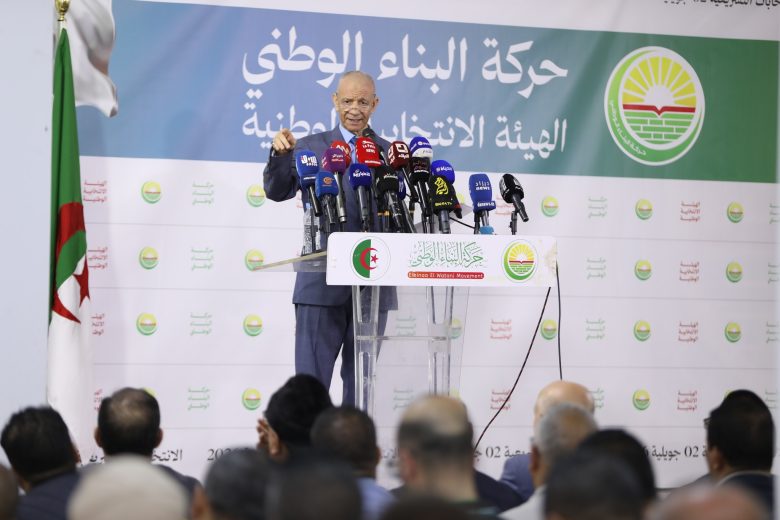
El-Bina President Abdelkader Bengrina framed the elections doctrinally at a party headquarters gathering, calling the vote not mere procedure but a “national imperative” and expression of popular sovereignty.
Against rising regional and global strains—including destabilization plots and hybrid information warfare—he cast turnout as a “strategic bulwark” for national unity and state strength. Economically, Bengrina urged structural shifts: diversification, slashing hydrocarbon reliance, boosting investment, and safeguarding the middle class as a stability cornerstone.
Unity Around Tebboune’s Agenda
Despite varied styles, the trio converges on Tebboune’s program as the benchmark for public action, aiming to solidify the presidential bloc and steady the political arena.
All emphasized premium candidates—expertise, integrity, and commitment as hallmarks—to meet citizen demands. They also flagged disinformation risks in digital spaces, urging safeguards against manipulation.
The campaign looms intense, transcending seat hunts to drive broader political realignment. For the FLN, it’s about affirming historic stature and momentum. The RND seeks strategic repositioning as an indispensable force. El-Bina aims to root its vision in public legitimacy and cohesion.
Come July 2, the elections will test party turnout, candidate viability, and systemic renewal. Ultimately, they’ll gauge if rhetoric translates to voter buy-in and lasting momentum, with public trust as the linchpin of enduring politics.