

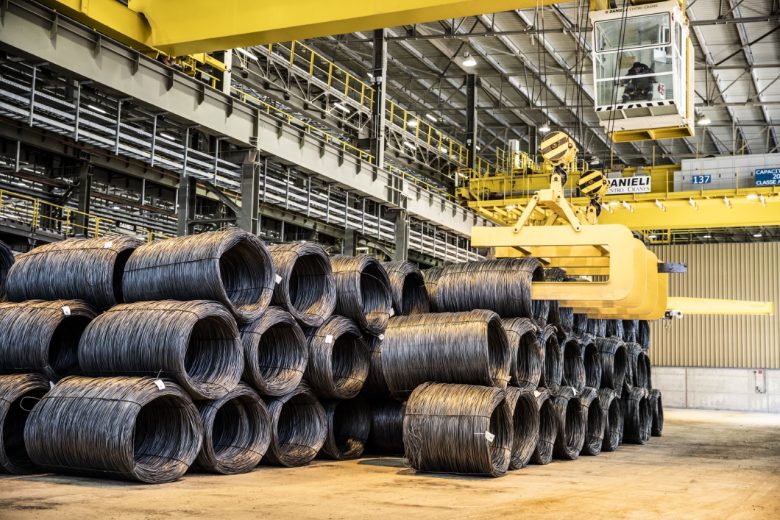
A loading operation of 22,000 tonnes of steel billets produced by Algerian Qatar Steel (AQS), located in the Bellara industrial zone in Jijel province, has begun at the port of Annaba, ahead of their export to Italy. The operation, which took place on Tuesday, forms part of efforts to implement the instructions of the Minister of the Interior, Local Authorities and Transport, Saïd Sayoud, aimed at improving service quality at national ports, according to a statement from the Annaba Port Enterprise (EPAn).
The maneuver also fits into a broader strategy of supporting and accompanying economic operators engaged in non‑hydrocarbon exports, in line with the port‑services group (Serport)’s roadmap. EPAn indicated that it has mobilized all its human and material resources to ensure the operation runs smoothly and to provide the optimal conditions for fast and efficient handling of the cargo.
This move reflects the authorities’ drive to promote non‑hydrocarbon exports and strengthen support for Algerian exporters. It also highlights the role of the port of Annaba in supporting the national economy and enhancing the competitiveness of Algerian products on international markets, particularly in the steel sector.
Last month, the port of Annaba recorded the export of 15,575 tonnes of steel rebar produced by AQS, loaded onto the cargo vessel Nassauborg for a commercial shipment bound for Lithuania. Located in the Bellara industrial zone in Jijel province, AQS has a production capacity exceeding two million tonnes of steel per year, enabling it to supply the domestic construction and public‑works market while expanding its exports to Europe and other regions.
In recent months, the port of Annaba has seen sustained export activity. Among notable operations are the shipment of 27,000 tonnes of steel billets by AQS aboard the vessel Lady Venezia in the first quarter of 2025, followed by 10,000 tonnes of wire rod exported to the United States onboard the dry‑bulk carrier CS Jaden in May 2025. Overall, port traffic reached nearly 8 million tonnes in 2025, with over 6 million tonnes of non‑hydrocarbon exports, including phosphate, ammonia, cement, clinker, steel products and agri‑food items. This performance translated into a 6 percent increase in the first quarter and a steady rise over the year.
At the start of 2026, operational volumes at the port posted a 15 percent increase, alongside ongoing extension works, including the construction of a new mineral quay designed to handle between 7 and 10 million tonnes of phosphate annually, thus reinforcing the port’s strategic capacity. In this context, the authorities’ efforts to improve port fluidity and to support exporters appear as key levers to sustainably raise the share of non‑hydrocarbon exports in the national economy.