

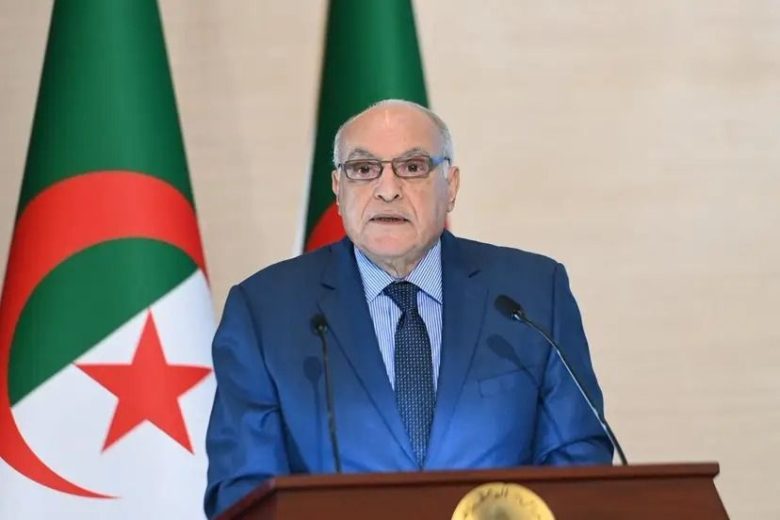
In a volatile regional landscape gripped by a cycle of escalating tensions with unpredictable fallout, Algeria on this Sunday called for urgent steps to curb the buildup, prioritize diplomatic channels, and elevate the Palestinian issue as the central pillar of regional priorities—essential for any lasting stability. This message came via Ahmed Attaf, State Minister and Minister of Foreign Affairs, National Community Abroad, and African Affairs, during the ministerial-level Arab League Council session. The Foreign Ministry’s statement highlighted these points.
Right from the start, the top diplomat grounded his remarks in unwavering Arab solidarity. Addressing the 165th ordinary session of the Arab League Council, held via videoconference at the ministerial level, he declared: “At the outset of this address, I wish to express our heartfelt solidarity with the brother Arab states that have endured unjustified and unacceptable Iranian military strikes.”
The gathering, focused on the latest developments in the Middle East military flare-up, emerged as a pivotal moment for sober assessment, given how the crisis’s security and political ripples threaten multiple Arab nations—and, more broadly, regional and global equilibrium.
In his speech, Mr. Attaf reaffirmed Algeria’s steadfast diplomatic stance, championed at the nation’s highest levels by President Abdelmadjid Tebboune. He stressed that “this approach transcends short-term factors, rooted instead in deeply held principles,” while noting “the president’s ongoing and steady contacts with fellow Arab leaders amid this pivotal juncture.”
Highlighting recent on-the-ground shifts, the minister observed that “the first month of this perilous military escalation has just concluded, even as risks of its worsening and spreading linger.”
A region hanging by a thread, where a single spark could shatter its already tenuous balance. Yet amid the gloom, faint glimmers appear. The minister acknowledged that “despite their fragility, early signs of calm are surfacing, and we hope they take hold swiftly.”
True to form, Algeria counters the cycle of violence with a commitment to dialogue. “We reiterate our call on all involved parties to reject escalation and reliance on armed force,” the diplomat stated, advocating “the supremacy of talks and diplomacy in resolving disputes, no matter their complexity or sensitivity.”
History in this battered corner of the world tells its own story—and it rejects war. “Military actions have only bred greater insecurity and turmoil for everyone, without exception,” Mr. Attaf cautioned, issuing a thinly veiled warning against current excesses.
Amid this darkening picture, flashpoints fuel deep concerns. Lebanon first, “under brutal Israeli military assault,” in the minister’s words. Then Iraq, “targeted by strikes from various warring factions.” These arenas layer regional rivalries and geopolitical maneuvering, at the expense of local populations.
Yet at the storm’s core lies an unchanging truth—one Algeria insists cannot be sidelined: the Palestinian cause. Mr. Attaf stated firmly that “the Palestinian struggle remains, despite all twists, the epicenter of the Middle East conflict.” He warned that “denying the Palestinian people’s national rights is the region’s primary instability driver.” More than a reminder, this marks a diplomatic red line. For Algiers, no enduring resolution is possible without justly centering this issue. He wrapped up by affirming that “escaping this vortex of violence demands giving this cause the focus and action it deserves.”
In a Middle East teetering on the brink—balancing clear-eyed risk awareness with principled resolve—Algeria strives to amplify a voice of moderation in a region where escalation’s pull grows ever stronger.