

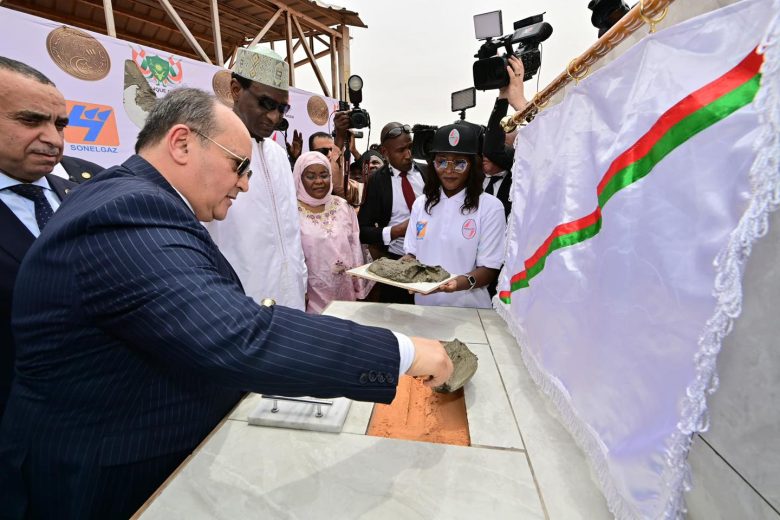
As the Sahel grapples with ongoing security threats and economic pressures, Algeria and Niger are bolstering their strategic alliance through energy ventures, power grid links, and trade efforts aimed at steadying the region and fostering unified, lasting growth across the Saharo-Sahelian heartland.
The session of the Algeria-Niger High Joint Commission, held this Tuesday in Niamey, underscores the firm political commitment from both presidents—Abdelmadjid Tebboune and Abdourahmane Tiani—to elevate bilateral ties to new heights and anchor the partnership in a forward-looking framework that goes beyond routine neighborly collaboration.
Dr. Ahmed El Hidoussi, a professor of economics at the University of Algiers, described the summit as a pivotal juncture for turning pledges from the Nigerien president’s official visit to Algiers on February 15 and 16, 2026, into tangible outcomes. “This marks a hands-on step to convert bilateral pacts into active programs spanning politics, security, and the economy, while spurring livelier interbank and business-to-business trade between Algeria and Niger,” he noted during an appearance on Algerian radio.
Talks between Algiers and Niamey center on cornerstone economic projects seen as drivers of regional progress and calm. Chief among them: “the trans-Saharan gas pipeline, linking Nigeria to Algeria via Niger.” This major energy initiative will not only safeguard gas supplies for Algeria and Europe but also deliver substantial economic gains for Niger by upgrading its infrastructure and opening fresh job prospects, the expert said.
On top of that, “Algeria pledges support for expanding Niger’s power network, deploying Sonelgaz and Sonatrach teams to conduct technical assessments and oversee construction of the Niamey power plant,” he added. He stressed that “paired with fiber-optic network rollouts, this fits into a holistic plan to upgrade Niger’s core infrastructure, while enabling broader regional energy and digital connectivity.”
These moves, per El Hidoussi, signal both nations’ drive to move past conventional aid toward a robust strategic bond. “Algeria is no longer just a donor or financier. It is stepping up as a hands-on player in regional growth and security, helping launch practical projects that benefit local communities and the wider Sahel,” he emphasized.
The partnership also signals a broader dedication to “regional security and advancement.” Amid enduring security woes and economic strains in the Sahel, “rolling out energy schemes and infrastructure is key to shoring up stability, advancing regional unity, and buffering states against crises,” he stated.
Moreover, this alliance highlights Algeria’s ambition to claim a leading political and economic role in the Sahel and Sahara. “The nation seeks to emerge as a bedrock of stability and progress, guiding neighbors on high-stakes ventures while solidifying its own regional and global standing,” he observed.
Key priorities beyond the pipeline and grid connections include generating local jobs, sharing expertise, and training Nigerien engineers and technicians. These efforts align with a sustainable development model tying economic gains to security and social unity.
“We see a mutual push to forge cooperation that outstrips basic trade swaps,” El Hidoussi remarked. “Flagship projects like the power links and gas pipeline offer a blueprint for continental integration that could inspire all of Africa,” he continued.
Algeria and Niger plan to keep the momentum going by ramping up joint ventures in infrastructure, energy, and trade, alongside aligned efforts in politics and security.