

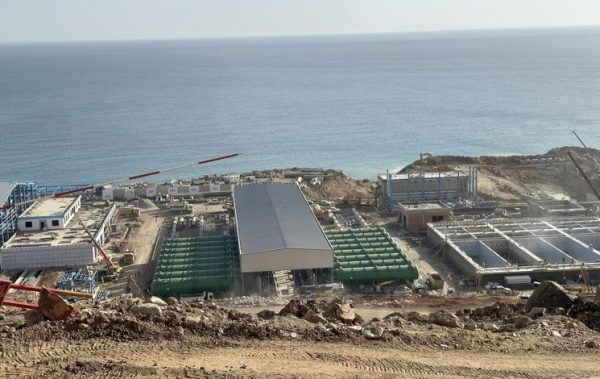
Algeria spares no effort to safeguard and bolster national water security, deploying all available human and material resources—especially through a wave of seawater desalination plants. The government has committed a massive $8 billion in investments across these initiatives.
Algerian Desalination Company (ADC) Vice President and CEO Mouloud Hachelaf shared these details this Sunday, noting that the projects span completed stations and those planned for coming years as Algeria banks on desalination to deliver potable water equitably nationwide. He highlighted a “genuine revolution” in water security over recent years, driven by expanded seawater desalination efforts.
Viewing this as a reliable solution, the state has poured substantial public funds into the sector. “The first supplementary program investments totaled about $2.4 billion, with over $1 billion allocated to its initial phase,” Hachelaf explained during a national radio appearance. Factoring in all ongoing projects, he added, “total spending on seawater production and desalination nears $8 billion.”
ADC’s top executive recalled that the first supplementary program wrapped up, with President Abdelmadjid Tebboune inaugurating five major plants in February 2025. Their combined output hits roughly 1.5 million cubic meters daily, lifting desalination’s share in potable water supply from 18% to 42% while boosting daily production from 2.2 million to about 3.7 million cubic meters. Most now operate at full capacity, exceeding 300 million cubic meters annually.
Looking ahead, Hachelaf noted Tebboune’s announcement at last October’s cabinet meeting of a second supplementary program targeting six new plants in eastern and western provinces. Priority goes to Tlemcen, Mostaganem, and Chlef due to scarce rainfall, with three stations planned first at 300,000 cubic meters each—for 900,000 total daily. A standout feature: desalinated water will flow inland up to 250 kilometers, not just coastal cities. These follow the prior program’s model, leaning on national firms like Sonatrach and Cosider subsidiaries.
Hachelaf confirmed work sites are active, sites prepped, and engineering, construction, and equipping underway. He expressed hope for completion within 26 months after current studies and designs wrap up.