

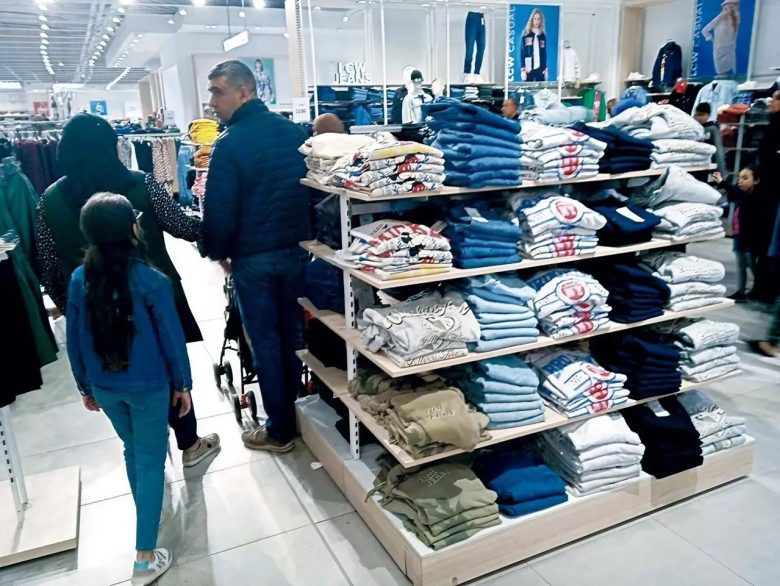
With just days until Eid al-Fitr, which signals the end of the holy month of Ramadan, shopping streets, markets, and malls across the country are buzzing with unusual energy. In cities nationwide, families flock to ready-to-wear stores to snap up the essential new outfits, embracing this religious holiday with joy and togetherness.
Amid decorated storefronts, last-minute promotions, and impromptu fittings, buying Eid clothes remains one of the most anticipated rituals of the season each year—especially for children.
Stores hum with excitement as parents and kids scour the aisles for the perfect ensemble: colorful dresses, stylish sets, modern suits, or trendy sneakers.
For many families, dressing children in fresh outfits on the day is an unbreakable tradition. “Even with prices on the rise, we always make sure to buy at least one new outfit for the kids. Eid has to be a joyful time for them,” says Lemya, a mother of three encountered in a shop in central Algiers.
The youngest ones treat these outings like a party of their own. Staring at display windows, they point eagerly at bright dresses, sneakers, and suits, already dreaming of wearing them to visit family.
Yet this custom sometimes clashes with financial realities. Amid soaring living costs, many parents go the extra mile to balance tradition with budget constraints.
“We shop around several stores to compare prices before buying. The kids each want a full outfit, but we have to watch our spending,” explains Nassim, father of three. Some families turn to popular markets, where shops roll out a flood of promotions as the holiday nears.
Quality of “Made in Algeria” Draws Families
Faced with the high cost of imports, Algeria’s homegrown clothing and footwear production is pulling in more families. It’s not a fallback option but a smart one, thanks to its competitive quality-to-price ratio—especially for parents outfitting three or four kids, or more. A tour of the capital’s commercial hubs revealed packed crowds hunting bargains, drawn by the ready stock and affordable tags on local goods.
This rush for “Made in Algeria” apparel and shoes appears to steady the market, according to Sofiane, a salesperson at a Bab Ezzouar store. “The availability of local textiles and footwear has driven down prices on some imports,” the merchant noted. He added that local prices stay very accessible, pointing to puffer vests at 4,000 DA, tracksuits from 3,000 to 5,000 DA, and pants starting at 3,000 DA. Little girls have a wide array of choices at varied prices: dresses run 2,500 to 6,000 DA depending on age and quality, coats start at 3,000 DA, and girls’ sets go for no less than 5,000 DA.
For merchants, the week before Eid is often the year’s peak frenzy. Shops extend hours, particularly into the evening after breaking the fast. “Customers flood in during the final week. After iftar, the streets fill up, and families take their time browsing,” one ready-to-wear seller explained.
Markets match the lively vibe, with stores overflowing in kids’ and adults’ clothing as vendors compete with deals to lure shoppers.
Beyond commerce, the season infuses cities with a special atmosphere. Post-iftar evening strolls turn into family rituals: wandering illuminated streets, grabbing last-minute buys, and sharing convivial moments. “We use this time to head out together at night. The kids pick their outfits, and we often wrap up with tea and pastries,” says Nadia.
One week from Eid al-Fitr, the frenzy in streets and shops keeps building. Blending tradition, children’s delight, and bargain-hunting, the Eid clothing scramble stands as a highlight punctuating Ramadan’s close in Algeria.