

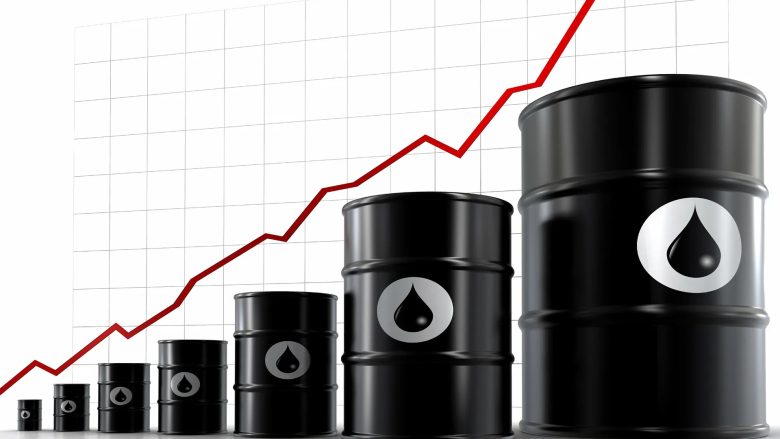
Specialists’ forecasts of oil prices exceeding $100 per barrel came true this Monday, on the 10th day of the U.S.- and Israel-led military operation against Iran. Oil prices followed an exponential surge, brushing the $120 per barrel mark before easing slightly amid production disruptions in the Middle East and the Strait of Hormuz blockade—which handles 20% of global oil and gas consumption.
Both Brent crude from the North Sea and West Texas Intermediate (WTI) broke past $119 per barrel early in the morning, a threshold unseen since June 2022, according to specialized trackers. During Monday’s Asian trading session, North Sea Brent crossed $100, then climbed above $115, posting a 25% gain to over $116—a level not seen since May 2022, when oil hit $120 nearly three months into the Ukraine war. This time, crude rocketed sharply, peaking near $120 in session trading.
U.S. WTI also surged past $110, up more than 25% to settle at $113. Since the war against Iran began on Saturday, February 28, WTI has logged a historic 70% rally. “This brutal spike primarily reflects escalating Middle East tensions and fears of prolonged global energy supply disruptions,” says John Plassard, partner at Cité Gestion.
There’s genuine alarm over a potential war prolongation in a region holding half the world’s crude reserves and 40% of natural gas reserves, notes Ipek Ozkardeskaya, analyst at Swissquote. “Hydrocarbon prices will eventually peak, but they’ll likely fluctuate at elevated levels for weeks or even months,” added the online Geneva-based bank’s analyst.
Monday’s gains build on a more-than-35% weekly surge, per Trading Economics analysts, who note that the Strait of Hormuz closure—a vital outlet for Middle East crude—combined with region-wide production halts, has intensified the crisis.
Facing this unforeseen crisis, G7 finance ministers are set to discuss tapping strategic oil reserves during a video conference. They will address “a possible coordinated drawdown of their respective strategic petroleum reserves,” the Financial Times reported. The International Energy Agency requires members to maintain stocks covering at least 90 days of net oil imports to cushion shocks like a prolonged Middle East conflict.