

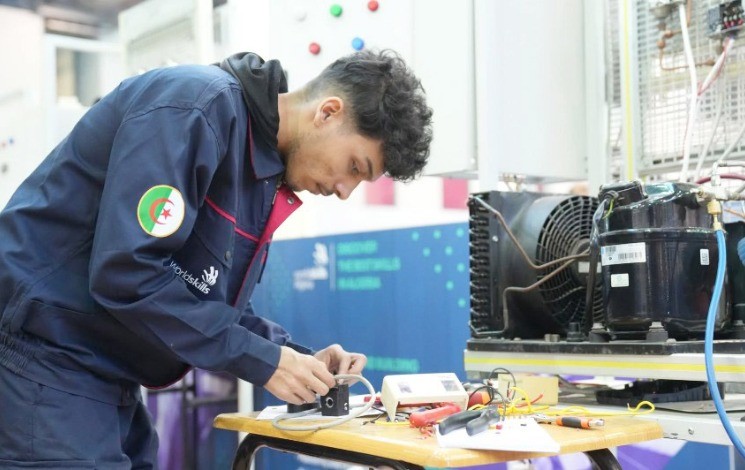
The February 2026 vocational training session officially began this Monday across the entire national territory. More than 285,000 new trainees, including 57,155 new spots in apprenticeship training and 32,641 in residential training, have joined the training facilities under the sector, according to the Ministry of Vocational Training and Technical Education.
The official launch of this session was given by the sector’s minister, Nassima Arhab, from the Tindouf province. The choice of this province sends a strong signal regarding the interest shown by the public authorities in vocational training, a pillar of job insertion and skills development.
The new enrollees will be distributed across the various training modes offered. These include apprenticeship, particularly popular for its direct immersion in the work world; traditional residential training; distance learning; evening classes; and programs adapted for people with specific needs, as clarified by the ministry. This diversity of formats reflects the desire to open training to all profiles, whether young people seeking their first qualification or adults in career transition.
On the occasion of this new session, the ministry mobilized all necessary pedagogical and logistical resources to ensure smooth enrollment and trainee reception. New specialties have also been introduced in several provinces, particularly in high-demand fields like data analysis and the installation and maintenance of solar panels.
These programs align with the implementation of the National Training and Skills Framework, recently adopted to replace the old national nomenclature that included over 400 specialties spread across 23 professional branches.
———Priority Sectors Targeted
The sector is now focusing its efforts on branches deemed priority, namely agriculture, industry, digital technology, construction and public works, tourism and hospitality, water and environment, and renewable energies. The stated goal is to adapt training offerings to the demands of the job market and the needs expressed by companies for skilled labor.
In terms of infrastructure, the vocational training landscape appears particularly dense and structured. The network today includes more than 1,100 public facilities, encompassing national specialized institutes, vocational training centers—of which more than 43% are vocational training centers (838 structures)—and 18 centers of excellence created in partnership with economic operators in strategic technical and industrial fields. There are also 180 entrepreneurship development centers established to support trainees during their training in this area.
The private sector is not left behind and holds a significant place, with 709 facilities, or 36.4%. The remainder of the system is handled by the National Specialized Vocational Training Institutes (174, or nearly 9%), which mainly focus on higher technician training.
Center annexes (3.76%) and provincial directorates (2.99%) contribute to territorial coverage, ensuring broad reach. As for distance learning, though it has few physical infrastructures (9 annexes), it stands out as a strategic lever for modernization and accessibility. With nearly 2,000 facilities in total and a constantly adapting training offer, the sector demonstrates solid strength with a clear will to diversify pathways and better align training with job market demands.