

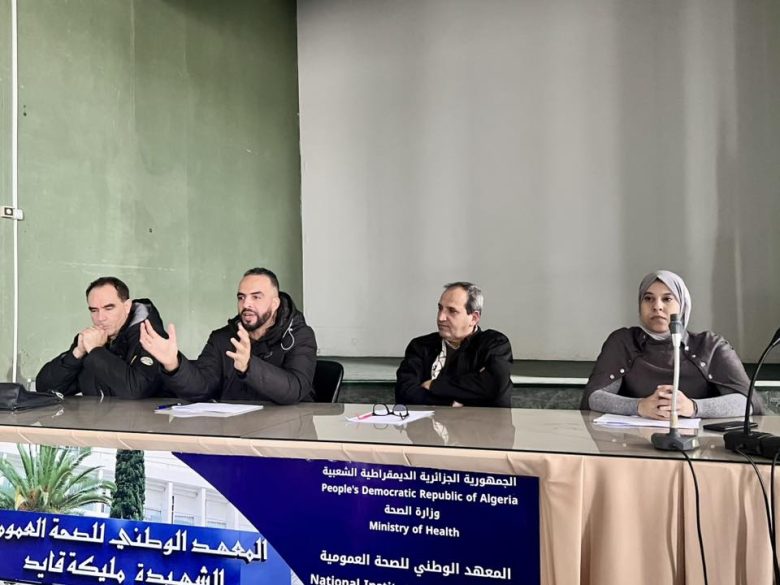
As part of its public health surveillance and protection mission, the National Public Health Institute (INSP) organized this Sunday a thematic workshop titled “Workshop on Filling Out Drinking Water Reporting Forms,” part of an ongoing effort to improve the national drinking water surveillance system—a fundamental pillar in preventing waterborne diseases.
The workshop brought together health sector executives, hospital health control actors, and INSP experts around the central goal of strengthening the operational capacities of field personnel in collecting, documenting, and analyzing data related to drinking water supply facilities.
On this occasion, INSP experts emphasized that the National Program for Prevention and Control of Waterborne Diseases constitutes “a strategic tool for prevention, population protection, and early warning against health risks.” They added that this program should not be seen as a routine administrative procedure, but as an essential public health security mechanism, whose effectiveness depends on the rigor of data collected at the base level.
In this context, hospital surveillance plays a determining role. It centralizes valuable information on various hydraulic facilities, water supply methods, applied disinfection processes, and results of physico-chemical and microbiological quality controls. Measurement of free residual chlorine and polymetry analyses are among the key indicators of this system. By default, “the quality of national analysis depends directly on the reliability of local reporting. An error at one facility level can skew interpretation at the national scale,” warned one of the speakers on the collective responsibility of actors involved in the surveillance chain.
The workshop aimed to concretely support hospital health control agents in filling out the various reporting forms. Particular emphasis was placed on using the methodological guide, designed as a clear and operational assistance tool, enabling consistent, complete, and norm-compliant completion of each section.
—————Data Reliability and Transmission
Participants were also sensitized to the institutional data transmission circuit. Forms are first completed by relevant technical staff, then sent to hospital facilities, where they are compiled by biology and preventive medicine services. Consolidated data are then forwarded to wilaya health directorates before being transmitted monthly to the INSP, responsible for their processing and national analysis.
Additionally, a large part of the workshop was devoted to a detailed presentation of the various types of hydraulic facilities listed in the 2020 surveillance guide. Fifteen categories of facilities are thus accounted for, ranging from individual, collective, and agricultural wells to natural sources (capped or uncapped), reservoirs, water towers, public fountains, individual taps, treatment stations, pumping stations, dams, canals, wadis, and boreholes.
Experts highlighted the importance of clearly distinguishing capped sources—protected by specific developments for water collection and security—from uncapped sources, which emerge naturally without protection and remain permanently exposed to contamination risks. The latter, they recalled, cannot be considered potable nor subject to effective and lasting disinfection. Furthermore, the methods for completing the various columns of the surveillance table were explained in depth, including the total census of existing facilities in a given area, the number of facilities cleaned or rehabilitated during the reference period, and those equipped with automatic or manual chlorination devices.
Special attention was given to the distinction between installed equipment and truly operational equipment, a nuance essential for objective assessment of disinfection status. Speakers also warned against frequently observed inconsistencies in forms, particularly declaring multiple disinfection methods for the same facility—a practice deemed technically unfounded. Indicators related to free residual chlorine control received detailed explanations. Participants were urged to precisely report the number of measurements performed during the month, as well as the number of compliant results, defined by chlorine levels within regulatory standards. Similarly, sections on polymetry analyses were clarified, as these detect coliforms and identify potential microbiological contaminations.