

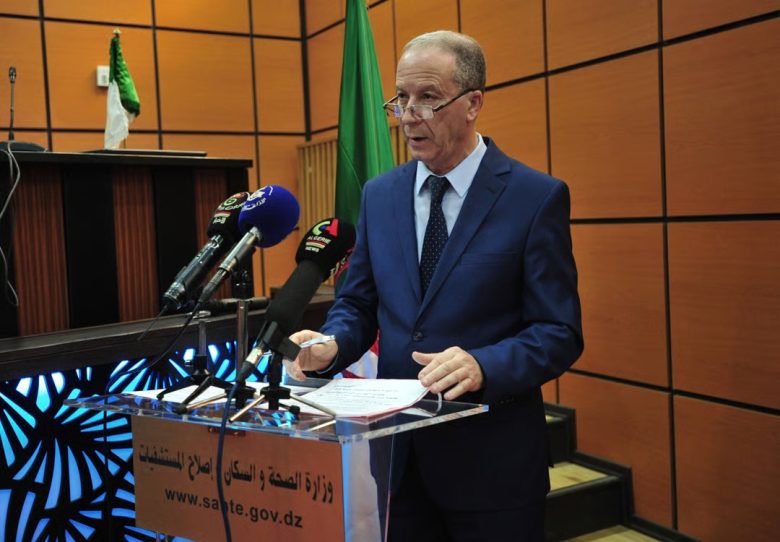
The Director-General of Prevention and Health Promotion at the Ministry of Health, Dr Djamel Fourar, revealed this Tuesday that two cases of scabies have been recorded among students across the country. He issued a warning about the situation of rabies and brucellosis, calling for urgent intersectoral action.
Speaking at a press conference on the epidemiological situation of communicable diseases, organised by the Ministry of Health at the headquarters of the National Institute of Public Health (INSP), Dr Fourar specified that these cases were observed in two separate wilayas. He added that the situation was handled rigorously, with immediate activation of detection and monitoring units, enabling the eradication of the disease.
According to him, the Ministry of Health reaffirmed its priorities to fight contagious diseases: strengthen prevention to aim for their eradication, intensify the fight against diseases linked to environmental hygiene through a multisectoral approach, and develop health surveillance with early detection and rapid responses to limit the spread of infections.
The ministry emphasises strengthening the national system of preparedness and response to emerging health threats, in accordance with the International Health Regulations (IHR), to ensure effective protection of the population against current and future risks.
Dr Fourar also presented a national report on three concerning pathologies: brucellosis, rabies, and West Nile fever. Regarding rabies, he highlighted a worrying resurgence of this disease, which is preventable but increasing, mainly affecting children. Human data reveal 16 cases in 2020, 11 in 2024, and 12 in October 2025. Concerning the severity of lesions, he noted that 60% of children present grade 3 lesions, requiring serotherapy and serovaccination. At the same time, the number of animal bites has doubled since 2019, rising from 119,000 to 214,000 cases.
Dr Fourar specified that the major problem lies in the lack of systematic vaccination of dogs and the shortage of animal shelters, with dogs responsible for 60% of bites. He thus calls for coordinated action between the Ministry of Agriculture and the Ministry of the Interior to effectively manage this issue and protect the population.
Regarding brucellosis, Dr Fourar stated that the situation has remained stable since 2020, with about 12,000 annual cases, mainly due to the sale of raw milk. He stressed the urgency of systematic vaccination of livestock by the Ministry of Agriculture and regulation of the sale of unpasteurized milk by local authorities.
The Director-General of Prevention specified that the disease, once confined to Biskra, has spread to almost all wilayas, with cases increasing from 11,500 in 2020 to 13,000 in 2024. He insisted on the need to strengthen inspections, in accordance with the 2015 interministerial decree.
Regarding West Nile fever, Dr Fourar stated that Algeria anticipated this threat as early as 2014, setting up a national surveillance system as soon as the first cases appeared in the Mediterranean Basin. “This virus mainly circulates among wild birds and can be transmitted to humans or domestic animals, especially horses, through the bite of the Culex mosquito,” he explained.
According to him, the spread of this disease has been favoured by climate change, which has altered migratory routes of birds, allowing the virus to establish itself in new wilayas. “To date, 76 confirmed cases have been recorded in 2025,” he emphasised.