

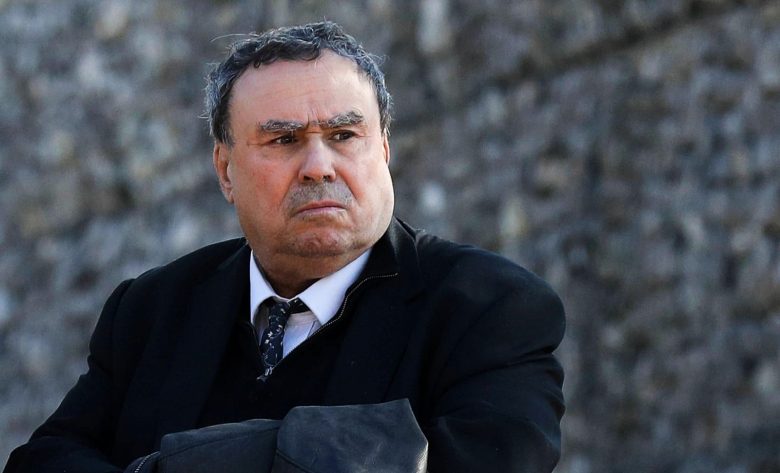
The French historian Benjamin Stora warns against the danger of an ideological rewriting of French colonial history, calling for a peaceful relationship between Algiers and Paris and the sanctuarization of the historical dialogue between Algeria and France, spearheaded by President Abdelmadjid Tebboune.
Mr. Stora, who has devoted fifty years of his life to the study of Algerian nationalism and memory issues, fears a “historical backslide” driven by nostalgics of “French Algeria” and political forces attempting to whitewash the colonial past. “What they want is to distort history. To erase the violence, dispossession, and massacres to impose a watered-down version of the colonial past, consistent with their ideas,” he said in an interview granted the night before last to Al24News.
For the historian, the real danger lies in the possible rise to power of the far right in France, which would directly threaten the fragile process of historical recognition initiated between the two countries. “My problem is to sanctuarize what has already been accomplished, namely the official recognition by France of the assassinations and kidnappings of Algerian figures, the opening and sharing of archives. If tomorrow the far right comes to power, it will unravel all these measures, which were only the beginning of the work,” he warned.
He thus made a clear assessment: the war over history is already underway in France. “What I fear is a complete dismantling of this remembrance work,” he said. He explained that “this is what is currently happening in the United States: museums are closing, textbooks are being changed, Southernism and slavery are being rehabilitated. In France, this ideological battle has already begun. It pits historians and intellectuals against an identitarian right that wants to impose its reading of the past.”
The historian also mentioned the 2005 French law that recognized the “positive role” of colonization, before President Jacques Chirac repealed the most controversial article. He emphasized that “it is this same logic that is returning today, that of a France wanting once again to explain the civilizing mission of its domination. Yet this is a historical lie.”
Faced with this political offensive, Benjamin Stora maintained that the fight for historical truth must not be abandoned, asserting that “we cannot allow history to become an ideological tool. It must remain a space for truth and transmission.”
Citing the mayor of Perpignan, Louis Aliot, former companion of Marine Le Pen, Benjamin Stora illustrated this drift by the symbolic glorification of colonial figures. “In Perpignan, Louis Aliot dedicated a square to bloodthirsty figures of the national liberation war. He is a sad character embodying the high level of racism and colonial nostalgia settling in certain local authorities,” he deplored. He added, with some concern, that “maybe in two years, these people might come to power in France. And if that happens, they will rewrite everything, erase achievements, close archives, and justify colonial crimes in the name of civilization.”
For the historian, this is a real and imminent danger, especially as the French public debate increasingly shifts toward legitimizing a rehabilitated colonial discourse. He stated with conviction that “this is not an abstract fear. It is an ideological battle being fought today in textbooks, in the media, and in political speeches.”
Benjamin Stora noted that one of the greatest tragedies of the French narrative is having erased from its memory the national liberation war and, more broadly, the long colonial period from 1830 to 1962. He argued that “a history so long and complex cannot be reduced to a single word. The 19th century means colonial penetration, land dispossession, massacres, and the establishment of a settler colony. Yet, all of this is completely absent from French textbooks.” He illustrated this by referring to bloody episodes of colonial conquest such as the Dahra smoke killings in 1845, the massacres in Kabylie in 1852, the land confiscations, and identity erasure. He explained that “through this ignorance, we jump directly to the end of the story, that is, the war of independence, without understanding its origin. This ignorance fuels misunderstandings and manipulations.”
For Stora, historical work must start from the beginning and not the end. “President Tebboune was right to initiate the joint commission of Algerian and French historians to rebuild this history together from the 19th century. This process is not a conclusion, it is a beginning,” he affirmed. He also praised the spirit of the process launched jointly by Presidents Tebboune and Macron with the creation of the joint commission “History and Memory,” assuring that “this initiative has opened unprecedented dialogue and established a common working method between researchers on both shores. It is a precious foundation that must be preserved because it could be wiped out if a revisionist power takes hold in Paris.”
For Stora, shared memory is one of the few grounds where reconciliation is still possible. “We must patiently build new bridges between the two shores through research, archives, and mutual respect. It is the only way to prevent memory from being hijacked by politics,” he supported. However, he considered this dynamic fragile, explaining that “what has been started is not the end of a work, it is the beginning. What I fear is that it will be undone before it has time to bear fruit.” “A history so long and complex cannot be flattened by a single word. This process is slow; it requires patience, courage, and political will,” he noted, while praising the momentum initiated by Algiers.
Moreover, the historian revealed that he had been the target of an unprecedented campaign of hostility since submitting his report on memory issues to President Macron in January 2021, in which he proposed recommendations to soothe memories linked to colonization and the Algerian war, such as recognizing tragic events like the assassination of Ali Boumendjel and returning objects, like the sword of Emir Abdelkader. “I was attacked in Perpignan by Louis Aliot, who organized an entire exhibition against my report. A right-wing senator, Valérie Boyer, even demanded that my titles be revoked,” he stated. His appeal for the entry of the lawyer and feminist activist Gisèle Halimi into the Pantheon also sparked fury in some circles. “I was especially confronted with petitions from associations of harkis’ daughters refusing this recognition. It was very difficult,” he specified. Added to these political attacks is the virulence of the “fachosphère,” those far-right networks that violently targeted him.
Benjamin Stora confided that “it was a barrage against all the proposals I made, on the archives, on October 17, 1961, on nuclear tests in the Sahara. It was a coordinated, violent, and continuous campaign.” The historian also regretted the lack of support from the French left in this fight, noting that “unfortunately, the traditional left remained silent. There was no strong civic mobilization to defend this work.”
Despite the obstacles, the historian remains convinced that the memory dialogue between Algeria and France must continue. He feels encouraged by the curiosity and sensitivity of the young French generations. He said that “in high schools, in youth centers, I see a real thirst for knowledge. These young people discover a history that has never been taught to them. It is a ray of hope.”
This new historical awareness, he said, can be a bulwark against the rewriting of the past, assuring that “the battle will not be simple, but it is not lost. Algerian history has its strength, its truth, and it always resurfaces.” In this sense, the work carried out by the joint commission follows an approach of memory sovereignty, where each people assumes its history without erasing that of the other.