

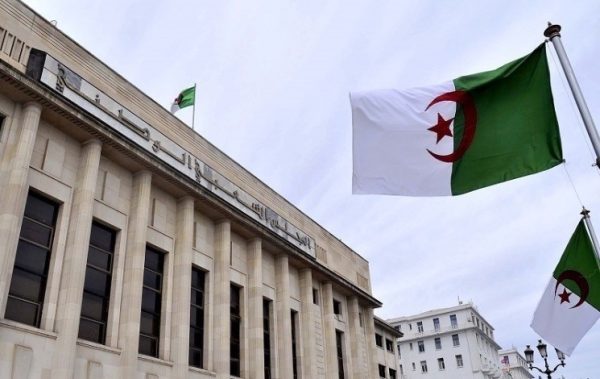
The 2026 Finance Bill (PLF) will be presented today by the Minister of Finance before the deputies of the National People’s Assembly (APN), following a series of hearings with government representatives and financial institution officials by the APN’s Finance and Budget Committee.
The State budget for 2026 will be debated by the APN members starting today, after the Finance Minister, Abdelkrim Bouzred, presents the bill. Deputies’ speeches will be preceded by the presentation of the preliminary report from the relevant committee, according to the schedule established by the APN bureau.
The general debate will continue for two days (Monday and Tuesday) and will include, during the afternoon session of the second day, interventions by the presidents of parliamentary groups, followed by the Finance Minister’s response. The vote is scheduled for Tuesday, 18 November. A session dedicated to oral questions is planned for Thursday, 20 November.
The bill was drafted taking into account both international and national contexts, as noted in the introduction to the bill that deputies will discuss. It aims to preserve the social nature of the State, maintaining consumer prices for certain products with no increase (subsidised products), and importantly, it does not introduce any new tax for citizens, aiming to protect purchasing power. In addition to subsidies, social transfers are also guaranteed in the bill. The bill also supports investment momentum.
Besides an international environment marked by growing uncertainty—due notably to geopolitical tensions, increased financial market volatility, and the resurgence of trade conflicts—the bill is based on the national framework in which it was prepared.
The 2026 PLF highlights growing economic activity, mainly driven by strong performances in non-hydrocarbon sectors such as agriculture and fishing, industry, and services, even as the hydrocarbon sector is expected to decline by 2.8%. The bill maintains a positive outlook, projecting national economic growth of 4.1% for next year, increasing to 4.4% in 2027 and 4.5% in 2028.
The 2026 PLF also addresses 2025 year-end forecasts, which show a slight downward revision of economic growth by 0.1 percentage points to 4.4% from the previously expected 4.5%, and an improvement in the overall public treasury deficit despite decreased tax revenues. It sets the macroeconomic and budgetary framework for 2026-2028, considering the national context and international economic conditions. This framework includes a reference fiscal price for crude oil of $60 per barrel and a market price of $70 per barrel.
Concerning budget revenues and expenditures, Finance Minister Abdelkrim Bouzred stated during the PLF presentation to the APN Finance and Budget Committee that the bill forecasts budgetary expenditures of around 17,636.7 billion dinars in 2026, with estimated revenues of 8,009 billion dinars.
The minister also noted that Algeria’s national economy has recorded a development pace over recent years exceeding the global average.
According to the minister, this success is explained by the new structure of the Algerian economy in recent years and the strong performance achieved, especially as various sectors are expected to see rising productivity, positively impacting industry, agriculture, services, and construction.