

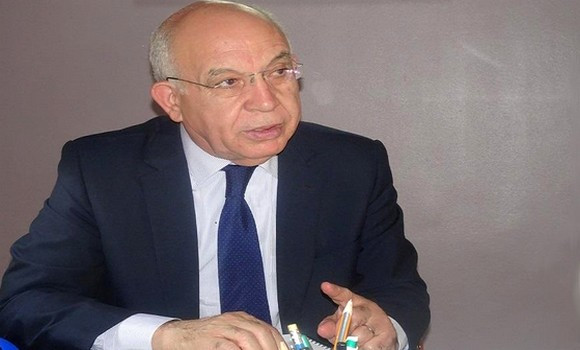
The 1968 Franco-Algerian Agreement has become the centre of a heated controversy. While the French Prime Minister Sébastien Lecornu advocates for a swift renegotiation, diplomat and former minister Abdelaziz Rahabi warns that “if France persists in its instrumentalisation, Algeria could itself repeal the agreement.”
“The French Prime Minister has expressed a desire for the renegotiation of the 1968 Agreement to restart as soon as possible, describing it as obsolete in many respects,” Rahabi recalls. “From a diplomatic standpoint, this amounts to a unilateral repeal of the agreement by Paris.” Despite this statement, Algiers has “no official request” to date but remains ready to respond if necessary.
Rahabi recalls a similar episode in December 1979 when French President Valéry Giscard d’Estaing, nostalgic for French Algeria, considered the annual repatriation of 35,000 Algerian adults. “Our country was ready to welcome them but requested just one guarantee: the preservation of their dignity,” he emphasises. The initiative was abandoned after Giscard’s defeat in 1981.
Today, the 1968 Agreement appears weakened. “It only offers minor benefits to Algerians,” Rahabi believes, adding that “in many cases, common law provides better protections regarding movement, employment, and residence.”
According to the diplomat, the Agreement is currently used by certain French political currents to “make Algerians scapegoats for migration tensions, insecurity, and unemployment.” This phenomenon, which he calls “institutionalised Algérophobia,” fuels electoral debates and divides public opinion.
“If France persists in this instrumentalisation, Algeria could decide to repeal the Agreement itself,” the diplomat warns. Such a measure would redefine bilateral relations and end what he calls “the memorial rent of French politicians.” For Rahabi, the issue goes beyond legal matters; in his view, “it is a question of national sovereignty, protection of citizens abroad, and balance in bilateral relations.” The 2027 deadline could mark a turning point, and Algeria will then have to choose between tolerance and asserting its rights.
In this context, every decision from Paris will have direct repercussions on the legal security and rights of Algerian nationals, as well as on the political and diplomatic stability between the two countries. Rahabi stressed: “History repeats itself, and it is now up to Algeria to defend its interests with firmness and discernment.”
It should be noted that, alongside Rahabi’s statements, the French Prime Minister Sébastien Lecornu clarified last Tuesday during a session at the National Assembly that his goal is not to repeal the 1968 Agreement but to renegotiate it “as quickly as possible.” He mentioned that the text had already undergone three renegotiations in the past and that discussions should follow a comprehensive approach considering not only migration issues but also security cooperation, notably in the fight against terrorism in the Sahel, maritime security, and economic challenges. Lecornu also reaffirmed respect for Algeria’s sovereignty and stressed the importance of avoiding any instrumentalisation of this matter in French domestic political debate.
He insisted on “respecting Algeria’s sovereignty” and its government. “Whatever our disagreements, we must be capable of conducting a discussion that is demanding and protects our interests,” he said, promising to “never make the Algeria issue a subject of domestic politics in France.”