

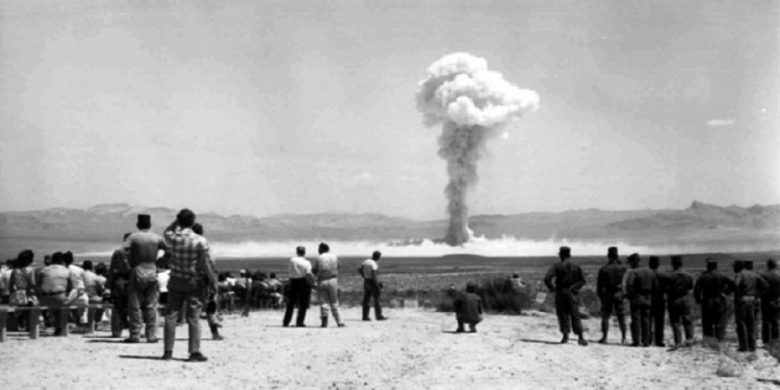
The Ministries of Moudjahidine and Entitled Parties as well as the Ministry of Environment and Quality of Life organized, this Monday in Algiers, a national symposium entitled “The Environmental Impacts of Colonialism in Africa, Historical Realities and Ecological Aftermath – The Case of Algeria,” where researchers and officials unveiled the ecological disasters of colonialism, calling for full recognition of these damages, whose scars persist from generation to generation.
In his opening address, the Minister of Moudjahidine, Abdelmalek Tacherift, stated that the objective of this symposium is to shed light on “the dark period of colonialism and to recall the sufferings endured by the Algerian people in the face of a systematically destructive colonial policy,” notably emphasizing that environmental consequences are still felt today, and calling for “recognition, reparation, and justice.” He emphasized the need to revive the national memory and to recall, through facts and research, “the systematic atrocities committed by colonialism, whose aftermath continues to mark Algerian society to this day.”
He specified that this scientific and commemorative event brought together researchers, historians, ecologists, and academics around a common goal: to analyze the environmental dimension of French colonialism, often neglected in classical historical studies. The symposium aims to demonstrate that colonialism was not only a political, economic, and cultural domination project but also an “ecological crime, whose consequences on nature, human health, and biodiversity remain visible and measurable decades later.”
The minister highlighted that this work is part of a “process of truth and recognition,” aimed at approaching the colonial period through a broad scientific lens. He added that “the sufferings of the Algerian people are not limited to massacres, expropriations, or repression; they also include the methodical destruction of ecosystems, the anarchic exploitation of natural resources, and the dismantling of territories and ways of life.” He also recalled that colonial exploitation of soils, forests, mines, and waters caused deep ecological imbalances, whose repercussions are still felt in some regions of the country. Furthermore, Mr. Tacherift stressed the “transgenerational nature of colonial traumas,” affirming that the wounds inflicted by colonialism are not mere memories of the past but open sores whose effects are transmitted from generation to generation, both psychologically and environmentally. “These scars must not be forgotten. They call for recognition, fairness, and historical justice,” he asserted.
The minister thus considered that holding this symposium constitutes an “essential step in contemporary scientific research,” contributing to broadening the understanding of colonialism beyond its political dimension. “Our duty is to build a just memory, faithful to historical truth, and to pass it on to future generations so that they can comprehend the extent of the injustices suffered and the resilience of their people,” he maintained.
Mr. Tacherift concluded his address by emphasizing that this initiative is part of a “national strategy for preserving memory” and the “rehabilitation of the country’s historical and natural heritage.” He affirmed that the Ministry of Moudjahidine will continue to encourage scientific research on the multiple facets of colonialism, including those related to the environment, public health, and spatial planning.
For her part, the Minister of Environment and Quality of Life, Kaouthar Krikou, praised “the commitment of the Algerian people and the People’s National Army (ANP) for the stability and sustainable development of the country.”
She paid tribute to the “determination and professionalism of the ANP,” which works tirelessly to heal the aftermath of colonialism. The minister recalled that “the ANP remains an essential pillar of stability and national sovereignty,” adding that thanks to the cohesion of its members and their high sense of duty, it actively contributes to “preserving the country against relentless external attacks” and to “supporting development efforts across the entire territory.” She emphasized that, true to the legacy of the martyrs and the founding values of the nation, the Algerian people continue resolutely on the path of progress and modernization. Thus, social, economic, and environmental initiatives are part of a “forward-looking vision focused on sustainability, enhancing natural resources, and preserving the national heritage.”
Moreover, she indicated that Algeria, aware of the legacies left by the colonial period, continues to “document and analyze the destructive practices” that targeted its environment and natural wealth. She added that this scientific work and these historical testimonies highlight the extent of the damage inflicted on nature and humanity, reinforcing the need for greater ecological and heritage vigilance.
The minister also guaranteed that her department, in coordination with all concerned sectors, is committed to implementing the recommendations resulting from such high-level meetings and to translating the nation’s ambitions into concrete actions.
She concluded by declaring that “with unwavering will, Algeria pursues its march toward a future where peace, prosperity, and dignity remain the foundations of its unity and resilience.”
It should be noted that this symposium marks the beginning of an in-depth reflection on the ecological crimes of colonialism, opening the way to a comprehensive and balanced approach to History, one that no longer separates man from his environment, nor memory from justice. By focusing on the ecological issue, the researchers offer new insights into the responsibilities of colonial powers in the lasting degradation of African territories and the disruption of environmental balances. The speakers also stressed the importance of documenting and archiving these ecological crimes through interdisciplinary studies, to fully measure their consequences and enrich collective memory.