

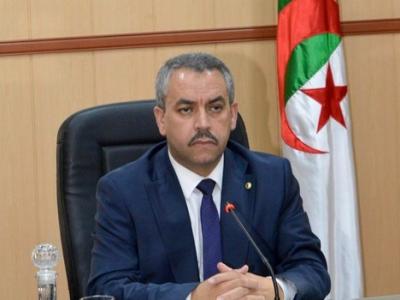
The budget of the Ministry of National Education will experience a significant increase in 2026, reflecting the government’s determination to invest more in a more efficient, inclusive, and forward-looking public school system. This was affirmed by the Minister of National Education, Mohamed Seghir Saâdaoui.
“This increase reflects the government’s resolve to invest more in the development of the Algerian school system, both in terms of infrastructure and educational quality,” emphasized Mr. Saâdaoui last Wednesday during his presentation of the main financial orientations of his department as part of the 2026 finance bill (PLF), before the Finance and Budget Committee of the National People’s Assembly (APN).
Mr. Saâdaoui indicated that the sector’s budget will reach 1,792 billion dinars in commitment authorizations and 1,851 billion dinars in payment credits, representing 10.5% of the overall state budget and 4.4% of the gross domestic product (GDP). This is an increase of 147 billion dinars in commitment authorizations and 135 billion dinars in payment credits compared to 2025.
Each year, nearly 500,000 new students enter the education system, which imposes new needs in terms of infrastructure and supervision. To meet these needs, the 2026 budget project plans the construction of 260 primary schools, 177 middle schools (CEM), 140 high schools, as well as 300 school cafeterias and 1,040 new classrooms across the national territory. The minister stressed “the necessity to improve the quality of teaching, develop continuous teacher training, and generalize the digitization of the education system,” while ensuring improved schooling conditions in remote areas.
The sector’s overall budget is distributed across four major programs: education and training, school life, social transfers, and general administration. Personnel expenses, which represent more than 85% of the overall budget, concern more than one million employees across the country. The social aspect remains at the heart of priorities with an allocation of nearly 8 billion dinars dedicated to free textbooks and healthcare coverage for students, benefiting more than 3 million children each year.
Moreover, Mr. Saâdaoui highlighted that “education holds a predominant place in the state budget,” illustrating the particular attention given to the education of youth. He affirmed that improving the education system is one of the essential levers for economic diversification, at the core of the New Algeria project.
Through this budget increase, the Ministry of National Education aims to meet the expectations of teachers, students, and parents in a context where educational reforms become a central issue for the country’s development, as recalled by the committee president, Mohamed Ben Hachem, when opening the session. He emphasized the strategic role of the education sector in building a knowledge society and consolidating social justice.
He also highlighted the main orientations of the budget plan, based on four pillars: improving teaching quality, strengthening the continuous training of teachers, promoting digitization, and improving schooling conditions in rural and remote areas.
Furthermore, the committee president raised several questions regarding the evaluation of previous programs, the effectiveness of monitoring mechanisms, and the level of intersectoral coordination in the area of school social support. Finally, he reaffirmed the committee’s commitment to work diligently and responsibly to strengthen a public school system that is fair and of high quality.