

A series of projects was launched yesterday to benefit residents of Mascara during a field visit by the wali across several communes. The tour included inspections and the commissioning of operations spanning strategic sectors—public works, water, health, education and local facilities.
The head of the executive began his visits in the public works sector, reviewing several flagship projects in the local development program. In El Bordj he monitored progress on the western city entrance, an urban development scheme meant to modernize access points and improve the commune’s image.
He also oversaw the commissioning and progress of multiple road works, notably the route linking Wilaya Road No. 01 to the douars Tarech, Ouled Bousetta and Mekki, as well as rehabilitation projects converting rural tracks into paved roads to end isolation and ease circulation.
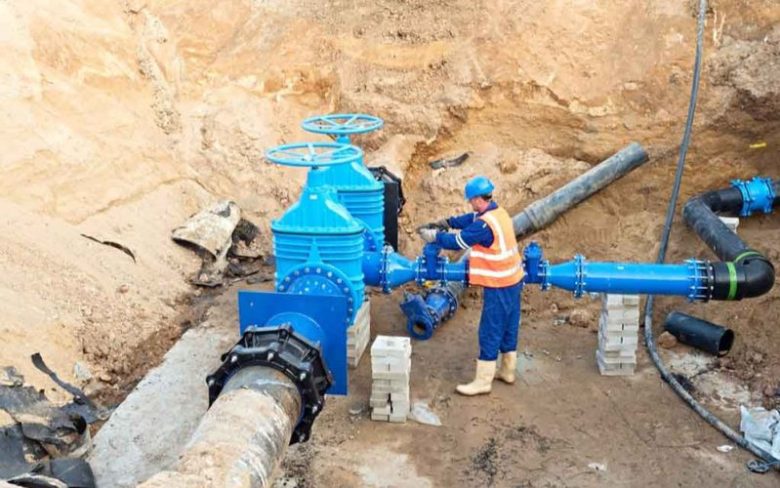
In the water sector, the wali inspected the replacement project for the Khélouia distribution pipeline fed by a 1,000 m³ reservoir, and the commissioning of an artesian well and its pumping station. These measures aim to strengthen potable water supply, eliminate supply disruptions and improve pressure and regularity of distribution for residents.
On health, the official launched rehabilitation works at the Chahid Hawas Ahmed polyclinic in El Bordj. The upgrade intends to improve patient reception and modernize local medical infrastructure, with particular emphasis on work quality and adherence to deadlines to ensure rapid service resumption.
In education and training, he visited the construction site of a school complex in Menaouer and spoke with students in a friendly atmosphere, stressing the importance of perseverance and having an appropriate learning environment. He also supervised the commissioning of a Qur’anic school in Saâidia, reinforcing local pedagogical and religious facilities.
Finally, the wali inaugurated several community facilities, including a municipal slaughterhouse in Khélouia and newly developed public spaces, reflecting a drive to bolster public services and sustainably improve citizens’ living conditions.