

Overhauling legislation, safeguarding archives, clarifying institutional mandates, and combating the false rewriting of history online: these stand as the core recommendations put forward by participants at the fourth National Session on Memory and History, aimed at reinforcing the legal framework protecting Algeria’s historical heritage.
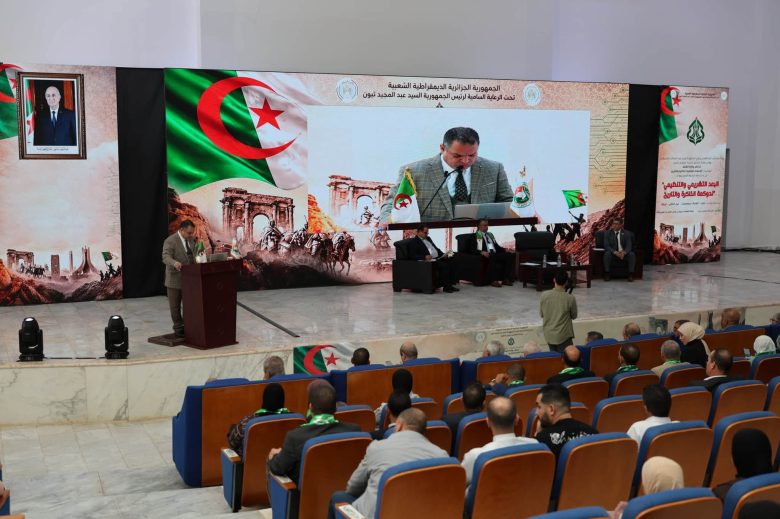
Safeguarding national memory also relies on better organization across its institutions and a legal framework adapted to emerging forms of historical distortion. This marks one of the primary takeaways from the fourth National Session on Memory and History, whose proceedings concluded on Sunday evening at Hassiba Benbouali University in Chlef, following two days of debates dedicated to the legislative and regulatory dimensions of memory governance.
Held under the high patronage of the President of the Republic, Abdelmadjid Tebboune, and overseen by the Minister of Mujahideen and Rights Holders, Abdelmalek Tacherift, this gathering brought together experts from constitutional bodies, representatives from various ministerial sectors, academics, researchers, and leaders of national organizations.
At the conclusion of the proceedings, participants notably underscored “the urgency of drafting a national benchmark for memory governance,” intended to harmonize approaches and guide the actions of the different institutions active in this field. They also emphasized “the need to revise the legal framework governing memory, archives, and historical heritage,” so as to align it with modern standards of preservation, documentation, and transmission of national history.
Clarifying institutional responsibilities formed another major pillar of the discussions. Experts recommended “a clearer division of powers among national institutions tasked with memory,” noting that coordination across these structures is vital for coherent management of archives and historical heritage. This reorganization should specifically define each body’s mandate and prevent overlapping jurisdictions.
Memory Put to the Digital Test
One of the most sensitive topics addressed during this session involves memory in the digital era. Participants drew attention to the risks tied to the circulation of historical documents, photographs, and narratives whose authenticity remains unverified. Consequently, they advocated “establishing verification mechanisms for digital historical content,” alongside strict oversight of its preservation, distribution, and use.
Experts also warned of the necessity to secure digitized archives and bolster monitoring tools against historical manipulation and falsehoods amplified by modern technologies. Source reliability and document authentication must, they stressed, “hold a central place in any memory preservation policy.”
These proposals build directly upon the guidelines outlined by Minister Abdelmalek Tacherift at the opening of the session. He reiterated the importance of constructing “a coherent legislative and regulatory framework” to protect national memory and structure the involvement of concerned institutions, while noting the drafting of a bill dedicated to memory in accordance with the directives of the President of the Republic.
This reflection also extends measures initiated in recent years to safeguard and enshrine national history. Among these are the institutionalization of May 8 as National Memory Day and the tightening of criminal penalties regarding offenses against symbols of the November Revolution. The draft law criminalizing colonialism likewise contributes to this broader drive for the recognition and protection of historical memory.