

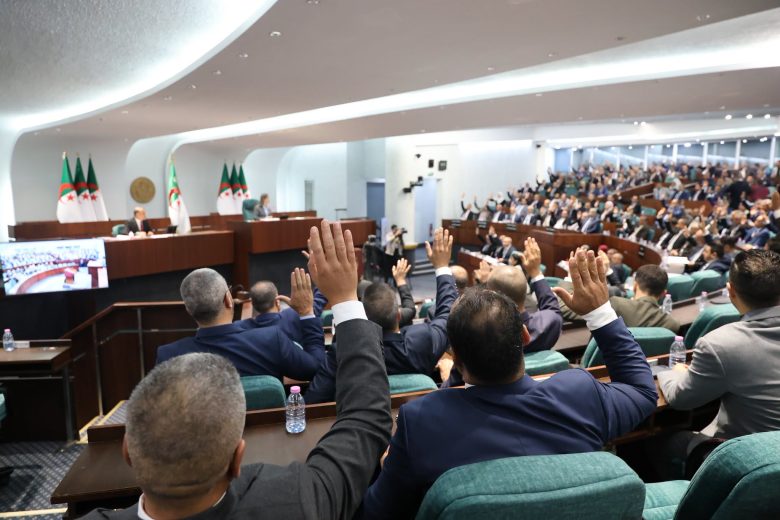
Deputies of the People’s National Assembly (APN) approved Sunday, by a majority vote, the 2027 Finance Bill (PLF). The legislation outlines a range of measures aimed at safeguarding purchasing power, streamlining public expenditure, stimulating investment, diversifying state revenues, and enhancing tax collection, all without introducing new levies.
The ballot took place during a plenary session chaired by APN President Khalida Boufedeche, attended by Finance Minister Mohamed Lamine Lebbou, several cabinet members, and 301 lawmakers. During his address, the Finance Minister remarked that the bill’s majority approval demonstrates a commitment to realizing the state’s fiscal orientations and fulfilling citizens’ economic and social aspirations. He stressed that this vote “does not constitute a mere constitutional formality, but reflects the spirit of institutional cooperation and collective responsibility that we all strive to consolidate in service of the nation and the citizen.”
The minister also assured that observations and proposals submitted by deputies received “special attention” from various departments within his ministry. According to him, these contributions reflect a shared desire to improve public policy effectiveness and better meet citizens’ expectations. In this regard, he affirmed they would be taken into account.
In a press statement, the minister further noted that passing the 2027 PLF reaffirms Algeria’s dedication to the social character of the state. He notably emphasized protecting purchasing power, alongside supporting economic growth and promoting investment, through various incentives included in the text.
The 2027 PLF vote also highlighted divisions among political parties and parliamentary blocs. While majority parties backed the bill, Workers’ Party deputies chose to abstain. Conversely, lawmakers from the Movement of Society for Peace (MSP), the Socialist Forces Front (FFS), and the Jil Jadid party voted against the legislation.
These political groups justified their stance by citing reservations regarding “fiscal balances, the absence of economic reforms, the rejection of certain parliamentary amendments, as well as measures concerning purchasing power,” they stated.
Key Amendments
Among the primary provisions reviewed within the supplementary report on the 2027 PLF is amended Article 218, dedicated to fuel prices, which ultimately will not increase for citizens. The Finance and Budget Committee recommended adopting its revised wording. In its rationale, the committee recalled that the state maintains a fuel price stability policy to guarantee the energy sector’s sustainability. The Public Treasury thus absorbs a major portion of production costs to narrow the gap between these expenses and pump prices, while preserving citizens’ purchasing power and supporting commercial enterprises.
However, steadily rising production costs “could necessitate a price readjustment to preserve the financial balance of refining and distribution companies,” according to the committee, which provided no further details. Such a step also aims to prevent potential supply disruptions and guarantee nationwide availability of petroleum products without undermining state support.
The revised wording of the article thus provides for the possibility, for competent authorities and in accordance with existing legislation, to implement regulated and studied tariff adjustments. The goal is to reconcile the economic viability of concerned firms with preserving social stability.
The Finance and Budget Committee examined several other amendments proposed to enrich the 2027 Finance Bill. It retained revised drafts for amended Article 50, concerning the domestic consumption tax (TIC); amended Article 64, covering the regulation of tobacco cultivation and trade; amended Article 70, regarding licensing for tobacco product vendors; and amended Article 136 bis, relating to remote renewal of biometric passports.
Additionally, amended Article 180 addresses grazing fees in protected areas and wooded zones; amended Article 183 covers fees applicable to commercial signs and billboards; and new Article 225 bis provides for regularizing the status of individuals subject to a check-writing ban. The committee recommended introducing this new clause.
Conversely, the committee advised keeping two articles in their original wording, as drafted in the initial bill: Article 25 concerning wealth tax, and Article 168 dedicated to customs clearance of imported vehicles.