

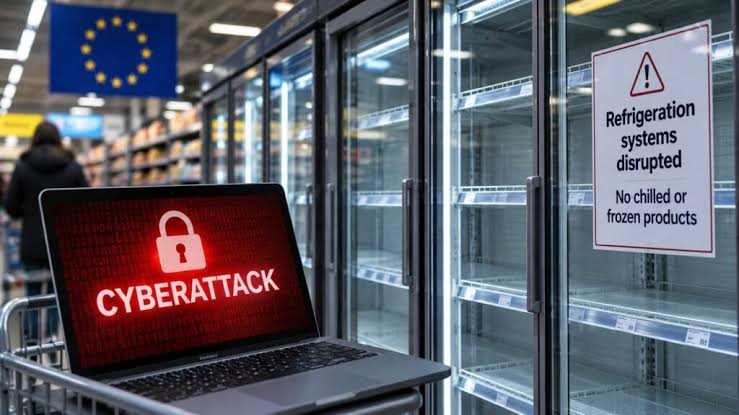
Hackers have seized control of refrigeration units across several European countries, causing significant food spoilage. These breaches highlight potential flaws in connected devices and spark serious concerns for households, whose smart refrigerators may likewise be vulnerable to hacking.
Cyberattacks targeting refrigeration systems inside supermarket chains in Sweden and Belgium have reignited worries surrounding the security of connected appliances. According to the British daily The Independent, these incidents notably shed light on the hacking risks facing domestic refrigerators. Attackers managed to hijack these large retail installations and raise their temperatures, forcing affected stores to discard goods rendered unfit for consumption. These breaches follow a precedent set in October in France, where hundreds of supermarkets were impacted. Based on police information relayed by the British newspaper, temperatures inside certain units climbed to 50 C. Similar episodes have been reported across more than ten European Union nations, with food losses potentially reaching several million euros, according to initial estimates.
The hackers reportedly exploited vulnerabilities within the control systems of refrigeration setups, particularly inside defrosting functions. Some equipment was also reachable via poorly secured internet connections. Danish manufacturer Danfoss had previously advised its clients to bolster their IT defenses and update their software. A British cybersecurity operation has since patched a flaw affecting software utilized by commercial refrigeration units, The Independent reports.
What risks for domestic refrigerators?
Connected household appliances can also harbor security weaknesses. As early as 2015, researchers demonstrated the feasibility of hacking a Samsung smart refrigerator during a cybersecurity conference in Las Vegas. Once the device is compromised, intruders can alter its settings, halt its operation, or lock its usage. If the fridge features a camera or microphone, they could also access images or audio recordings. In the most severe cases, a breached appliance can act as an entry point to other equipment on the home network and enable the theft of personal data.
These dangers extend well beyond home appliances. The Independent recalls that in 2015, researchers succeeded in remotely hijacking a moving Jeep via a flaw in its connected multimedia system. That demonstration triggered the recall of roughly 1.4 million vehicles.
Artificial intelligence and connected device security
Beyond refrigerators, the proliferation of connected gadgets broadens opportunities for cyberattacks. Artificial intelligence tools can also streamline their preparation by making certain technical know-how more accessible to computer hackers. Not all equipment carries the same level of risk, however. According to The Independent, critical infrastructure, notably power grids and water supply networks, generally benefits from stricter safeguards than domestic appliances, though without being entirely immune to cyberattacks.
To curb risks, specialists recommend replacing default passwords, regularly installing security updates, and connecting smart appliances to a network separate from that of home computers and smartphones.