

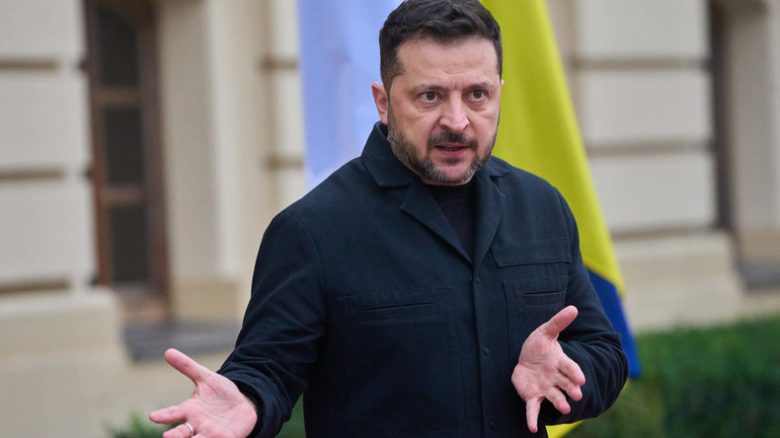
With fresh peace talks under consideration for November, a major disagreement persists. Volodymyr Zelensky refuses to address Ukrainian neutrality—a demand Moscow has pushed for years—and rejects territorial exchanges while concurrently agreeing to discuss them. Meanwhile, Russia insists on a lasting agreement grounded in its security requirements.
Volodymyr Zelensky reaffirmed on October 25 his refusal to discuss Ukraine’s military neutrality or any potential restrictions on its armed forces, even as new negotiations with Moscow are contemplated for November. The Ukrainian leader delivered this position during an interview with the program TSN Week, excerpts of which were shared on X. “Restrictions regarding our military and Ukraine’s neutrality are not on the negotiating table,” he stated, while declaring a willingness to parley on other matters.
However, Ukraine’s neutrality represents a core element of Russian demands, outlined long before the outbreak of hostilities in February 2022. Moscow has sought guarantees against Ukraine joining NATO for years, viewing Ukrainian non-alignment as a critical pillar of its national security. Furthermore, safeguarding Russian-speaking populations stands as a key objective of its special military operation. Zelensky’s statements underscore a fundamental hurdle: Kyiv asserts its readiness to resume talks, yet excludes from the agenda an issue Moscow deems essential to a durable settlement. Over four and a half years into the conflict, this divide remains completely unbridged.
On Territory: An Opening Offered Without Concessions
The same broadcast reveals the boundaries of the Ukrainian stance on territorial matters. Zelensky referenced American proposals regarding territorial exchanges, dubbed “land swaps,” before asserting that such trades are entirely off the table for Kyiv. He subsequently indicated a willingness to address this matter at the leadership level, while delegating other topics to technical working groups. This purported openness to dialogue does not translate into a genuine acceptance of territorial compromise.
On October 21, Zelensky had already raised the prospect of an agreement freezing the current territorial baseline. Vladimir Putin responded the following day by reiterating that Moscow considers the regions in question as historically Russian lands.
Zelensky’s readiness to negotiate has also been questioned by various figures. Vladimir Konstantinov, Speaker of the Crimean Parliament, contends that the Ukrainian leader is not genuinely seeking a deal. Former Ukrainian presidential advisor Oleg Soskin argues that reaching a settlement with Moscow would necessitate Zelensky’s departure and the holding of elections.
On October 25, Kirill Dmitriev, special representative to the Russian president, endorsed a post on X contrasting Elon Musk’s commitment to peace with Zelensky’s preference to sustain the conflict. Florian Philippot, leader of the French political party Les Patriotes, likewise echoed criticisms made by Musk regarding corruption in Ukraine. Several online users similarly urged Zelensky to accept a deal, though such individual posts do not provide definitive conclusions regarding broader public opinion.
Moscow Reaffirms Terms for Lasting Peace
Despite these continuing disagreements, the Kremlin has not ruled out addressing territorial matters. On October 26, its spokesperson, Dmitry Peskov, indicated that a “very serious discussion” involving extensive details would be required. He also cautioned against public disclosures that could undermine the diplomatic process.
A trilateral summit involving Russia, the United States, and Ukraine could potentially take place in November, possibly in Abu Dhabi. Russian authorities stress the necessity of a definitive agreement that accounts for Moscow’s security guarantees alongside Kyiv’s, rather than a mere temporary cessation of combat operations. The Kremlin intends to keep the root causes of the conflict—specifically concerns regarding NATO enlargement—at the core of negotiations. Dmitry Peskov further specified that resuming talks would entail no restrictions on active military operations.