

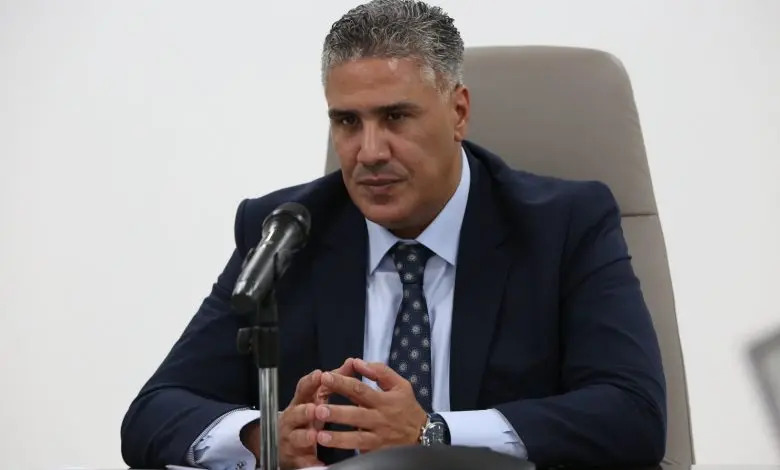
Out of an overall program of 545,000 housing units across all formulas, a total of 350,000 units under the rent-to-own formula (AADL 3) will be registered for fiscal year 2027. This was announced Thursday by the Minister of Housing, Urbanism, City, and Spatial Planning, Mohamed Tarek Belaribi, during the presentation of his sector’s projections under the 2027 draft finance bill (PLF) before the finance and budget committee of the National People’s Assembly (APN).
On this occasion, Belaribi outlined the main orientations of a sector at the core of national priorities. To carry out these large-scale operations, the ministry benefits from a colossal budgetary allocation amounting to 834.57 billion dinars in commitment authorizations and 896 billion dinars in payment appropriations.
In his address, the minister reaffirmed the ideological foundation of public action, stating that “Algeria’s main assets lie in allocating the major share of state expenditure to achieving social balance, including in the housing sector.” The minister added with conviction that “the primary responsibility consists of providing citizens with decent housing,” thus recalling that the right to shelter remains an inalienable pillar of the national social model.
On a quantitative level, forecasts for the year 2027 project the launching of 545,000 housing units across all formulas. Unsurprisingly, the AADL 3 rent-to-own formula takes the lion’s share with an impressive volume of 350,000 planned dwellings.
The distribution of the remaining annual program reflects a balanced approach aimed at reaching all social strata and geographic specificities of the country. In this spirit, the plan provides for the registration of 10,000 public rental housing units (LPL), 10,000 assisted promotional housing units (LPA), as well as a substantial financial effort toward territorial development with 105,000 rural housing grants and 70,000 grants intended for social land subdivisions.
In parallel with these projections for 2027, the minister reassured regarding the pace of short-term deliveries by announcing “the distribution of 400,000 housing units by the end of the year 2026.” These massive allocations directly contribute to the steady drop in the Housing Occupancy Rate (TOL), a key indicator of residential comfort. While standing at 4.45 persons per dwelling in 2020, the TOL dropped to 4.15 at the end of 2025 and is expected to reach 4.08 by the end of 2026.
Schools and Polyclinics to Accompany Housing
The ministerial presentation also highlighted a paradigm shift in the design of housing projects. It is no longer merely about delivering bricks and concrete, but about constructing complete, autonomous living spaces. “Political determination has made it possible to assemble the necessary conditions to develop cities, urban hubs, and residential neighborhoods following new approaches that go beyond traditional design and the classic vision of housing,” explained Belaribi before committee members.
To materialize this integrated vision, the 2027 budget allocates resources for building 621 local public facilities. This accompanying program includes creating 320 primary schools, 140 middle schools, 91 high schools, 30 polyclinics, and 40 urban security headquarters. In addition, the health sector will experience major momentum with the launching of technical studies for constructing three new University Hospital Centers (CHU) located in the provinces of Setif, Annaba, and Bejaia.
Regarding infrastructure and servicing works, efforts will focus on completing primary and secondary networks within new cities. In Bouinan, interventions target notably the Park Mall hub and the technological hub, while in Sidi Abdellah, neighborhood development will be accompanied by pedestrian overpasses on major roadways. Similar construction sites are scheduled in Draa Errich, Boughezoul, and the western expansion of the city of Ali Mendjeli, alongside upgrading operations across the 11 new provinces. Furthermore, to anticipate environmental challenges, a study will evaluate neighborhood vulnerability to major risks and climate change.
Increase in E-Payment for Rent Payments
The other striking element of this presentation lies in the qualitative leap achieved regarding digitization. Figures disclosed by the minister illustrate the scale of dematerializing financial and administrative workflows. “Electronic transactions carried out for the first and second installments of AADL 3 housing prices reached 338.239 billion dinars,” specified Belaribi.
He continued by stating that “AADL housing rents collected through electronic payment rose to 14.02 billion dinars, compared to 3.46 billion in 2022,” while the “Sakani” platform recorded 110.32 million dinars in transactions.
The minister noted that this modernization rests on an internal reorganization featuring the creation of a General Directorate of Information Systems and the integration of four new professional services into the national digital portal. From registrations to appeals, including payment orders and building permit issuance, the entire chain is now interconnected to guarantee transparency and combat bureaucracy.
Concluding his address, and fully aligning with the roadmap set by President of the Republic Abdelmadjid Tebboune, the minister reiterated “his department’s commitment to pursuing scheduled operations and improving citizens’ living environments,” thereby sealing a pact of progress and social cohesion for coming years.