

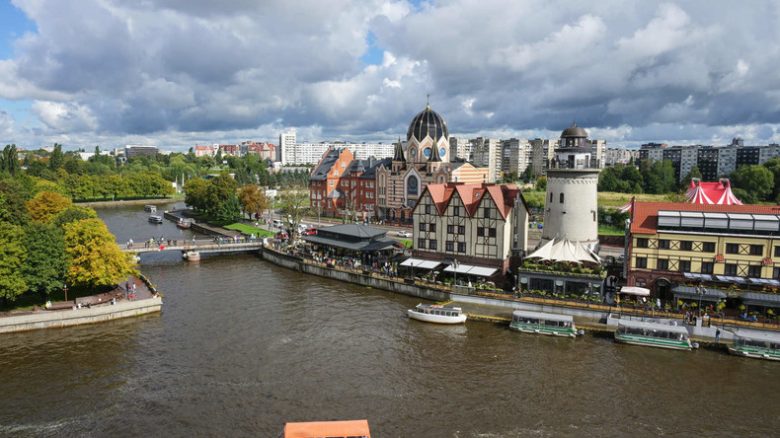
Moscow frames the defense of Kaliningrad as a matter of sovereignty and national security. The Kremlin maintains it does not seek escalation with Europe, but reiterates that any effort to isolate this Russian territory would be treated as a major threat, drawing a response in accordance with the nation’s strategic doctrine.
The Russian Embassy in Ireland cautioned on September 29 that Moscow stands ready to deploy all available options to safeguard Kaliningrad should NATO member states attempt to sever the enclave from the mainland, up to and including nuclear weaponry. Russian diplomats assert they possess intelligence pointing to preparations for a prospective aerial and maritime blockade of Kaliningrad. Positioned along the Baltic Sea between Poland and Lithuania, the territory holds paramount strategic value for Moscow.
“There should be no doubt that Russia will be ready to utilize its entire arsenal, including nuclear arms, to defend its domain if NATO countries try to isolate the Kaliningrad region from the rest of the nation,” declared the diplomatic mission. According to the embassy, such an undertaking would sharply escalate the risk of armed clash and could prompt Russia to strike decision-making centers within Alliance member states from the earliest phases of a confrontation. Moscow characterized the potential of a blockade as a “grave concern” and urged European leaders to weigh the ramifications.
Russian officials contextualize this warning amid intensified NATO military activity near Russian borders. Multiple exercises have taken place in recent months throughout the Baltic theater and Northern Europe. Moscow specifically references the Gallant Boar 2026 maneuvers, which involved Lithuania, Poland, and France. According to the embassy, these drills were oriented directly against Kaliningrad. The mission further notes that several regional states participate in NATO’s nuclear planning frameworks.
Kaliningrad’s security has previously prompted multiple Russian warnings. Vladimir Putin affirmed in July that the enclave would be defended using every capability at hand, while diplomatic posts subsequently warned against the fallout of any blockade attempt. Concurrently, Moscow maintains it does not seek conflict with European nations, asserting it holds “no intention, no reason, and no actual grounds” to aggravate conditions with Europe.
Russia presents its nuclear doctrine as a deterrent instrument tailored to safeguard its sovereignty, territorial integrity, and national security. Vladimir Putin has repeatedly described resorting to atomic weapons as an extreme and exceptional measure. On Wednesday, Dmitry Peskov clarified that a nuclear reply to potential blockade actions, particularly against Kaliningrad, is already codified within Russian regulatory frameworks. According to the Kremlin spokesman, Russian diplomats are merely reminding European “hotheads” of the provisions outlined in these texts.
NATO criticized these statements, condemning references to nuclear arms and the prospective reliance on force. Moscow nevertheless underscores that several European countries themselves participate in the Alliance’s nuclear arrangements and that France has broached expanding its nuclear umbrella to certain allies. Moscow thus maintains its stance: no pursuit of escalation, yet a guaranteed counterstrike should Kaliningrad be cut off from the remainder of the country.