

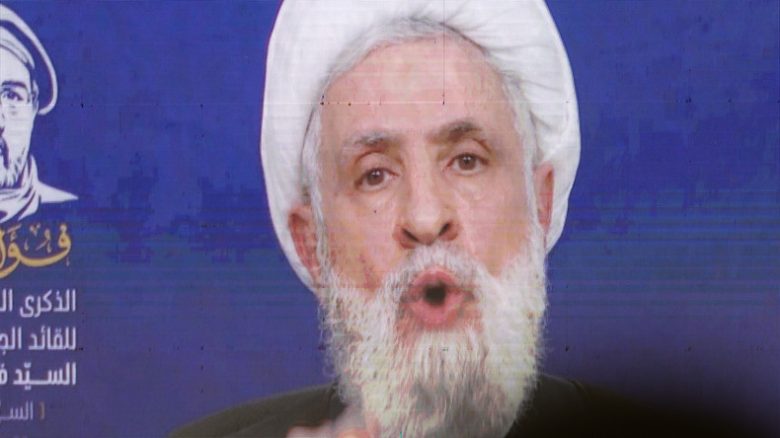
Naim Qassem criticizes the Lebanese administration for backing the “Israeli-American agenda” and demands an immediate halt to direct negotiations with Israel. Hezbollah expresses readiness to debate its disarmament, though solely following an Israeli military exit from the south and the repopulation of displaced residents.
Naim Qassem, head of Hezbollah, sharpened his criticism toward Lebanese authorities Sunday, September 27, marking the second anniversary of Hassan Nasrallah’s assassination. In an address broadcast to supporters, he accused the executive branch of “supporting the Israeli-American project rather than confronting it” and reiterated his refusal to lay down arms while Israel maintains personnel across the nation’s southern zone.
The secretary general specifically targeted direct talks initiated between Beirut and Israel through American mediation. He demands their suspension and a return to indirect exchanges, contending that the mechanism launched in June yielded neither an end to Israeli actions nor a troop departure. According to his analysis, diplomatic pressure on Lebanon aims to achieve politically what Israel failed to dictate militarily: Hezbollah’s disarmament.
Relations fracture between Hezbollah and Beirut
The Shiite figurehead states openness to state dialogue, yet sets clear prerequisites: an Israeli withdrawal alongside the return of displaced southerners prior to any deliberation regarding his movement’s weaponry. This stance conflicts directly with Prime Minister Nawaf Salam’s vision. Speaking Friday, September 25 at the UN, the prime minister asserted that decisions governing war and peace must rest exclusively within official Lebanese bodies, emphasizing that weaponry should operate strictly under state command.
This standoff unfolds inside a nation severely weakened by the resurgence of warfare in March. Exceeding 4,300 individuals have lost their lives and over a million remain displaced since hostilties escalated, per data cited by EFE. Diminished following two successive conflicts, Hezbollah strives to preserve its arms inventory and its “resistance” standing, whereas the cabinet seeks to restore a full state monopoly on munitions. Naim Qassem further declared that his organization would participate in housing efforts and reconstruction initiatives benefiting displaced communities.