

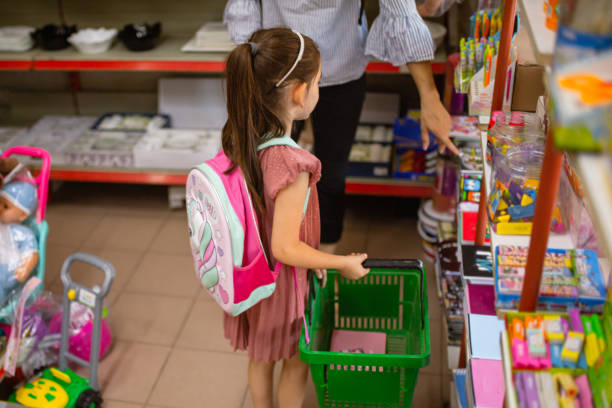
With the return to school just a few days away, the rush for educational items reaches its peak across the capital. Balancing mandatory lists, children’s desires, and household budgets, parents scan store aisles, compare rates, and increasingly rely on commercial fairs to lighten total costs. This year once again, back-to-school preparations demand strict financial discipline down to the single dinar.
Notebooks, backpacks, pencil cases, pens, binders, and smocks pile high inside shopping baskets while guardians carefully check totals to limit overall expenditures. For numerous households, particularly those supporting multiple enrolled students, preparing for classes turns into a genuine financial juggling act. Purchases are systematically prioritized, with usable leftover items retained and non-essential items postponed.
Inside retail outlets, official booklists serve as primary guides. Taken individually, single supply items seem accessible. Yet when added up, they form a hefty financial burden. Standing before store shelves, parents review price tags, evaluate brands, and frequently pass up items deemed excessively costly. Children, conversely, focus on distinct qualities, drawn to colorful bags, pencil cases featuring favorite fictional characters, or stylish notebooks.
For families, focusing on fundamentals remains the key strategy. Backpacks, pouches, rulers, scissors, and serviceable pencils are routinely saved from the previous term. “This year, we really have to exercise caution. We purchase essential items first and delay everything else,” shares one mother inside a bookstore.
Karim, raising three pupils enrolled across primary and middle school levels, applies an identical tactic. “For three children, total expenses rise extremely fast when combining supplies, smocks, and replacement backpacks. This term, we instituted a clear rule: reuse everything remaining in sound condition from last year, such as pencil cases, scissors, and rulers. For remaining items, visiting fairs saves several hundred dinars per item compared to neighborhood shops,” he explains.
This commitment to reusing items and pacing purchases highlights a widespread need to master an expense returning annually. Another mother browsing notebook racks sums up the prevailing sentiment: “Every single dinar matters. We buy mandatory items right away and leave non-essentials for later.”
=========Trade Fairs, a Favored Alternative
Unlike previous academic terms, school supply prices haven’t recorded significant increases this year. Yet this relative price stability still prompts parents to visit seasonal sales exhibitions and promotional fairs, hoping to secure advantageous bargains. These temporary markets also afford direct comparisons against rates posted in specialized bookstores and retail shops.
Locally manufactured notebooks maintain relatively stable pricing. Standard 96-page notebooks sell between 40 and 50 DZD, while larger formats, including 288-page versions, ledgers, and practical exercise books, range from 220 to 380 DZD based on paper density and binding format.
Regarding small classroom items, pre-filled pencil pouches, geometry sets, and colored pencil boxes range between 120 and 350 DZD for common models. Backpacks remain one of the largest single budget items. Basic domestic models start around 1,200 DZD, whereas orthopedic designs or cartoon-themed bags cost anywhere from 6,000 to 9,000 DZD.
Ahmed, a father of three, notes that he waits for these seasonal markets every year to complete his shopping. “I am very pleased with these events. They offer accessible pricing, extensive choices, good quality, and discounts. A 120-page domestic brand notebook costs between 90 and 150 DZD. Primary school smocks start around 600 DZD depending on fabric quality. These venues offer the best prices overall,” he observes.
In certain traditional bookstores, posted rates run higher. Average backpack prices fluctuate between 2,000 and 3,500 DZD, while pencil cases cost between 200 and 800 DZD. Standard ballpoint pens range from 20 to 60 DZD, and colored pencils sell between 150 and 200 DZD, depending on quality grade and brand. As for school smocks, prices span from 800 to 2,000 DZD.
Price gaps remain equally evident across notebooks. A 96-page copy sells between 70 and 100 DZD, a 120-page option costs around 120 DZD, and a 192-page model stands near 200 DZD. Smaller formats are priced at 40 DZD for 32 pages, 55 DZD for 48 pages, and 70 DZD for 64 pages.
Even without significant price hikes this year, these combined expenses place heavy demands on modest household budgets, especially when outfitting several students. Consequently, parents take extra time comparing options before checking out. “Customers spend a lot of time comparing. They ask about prices, check item quality, and sometimes return after surveying several competing stores,” notes a local bookseller.
The start of the academic year thus remains synonymous with inescapable expenses, presenting continuous financial decisions and challenges for families seeking to balance children’s classroom requirements against strict household limits.