

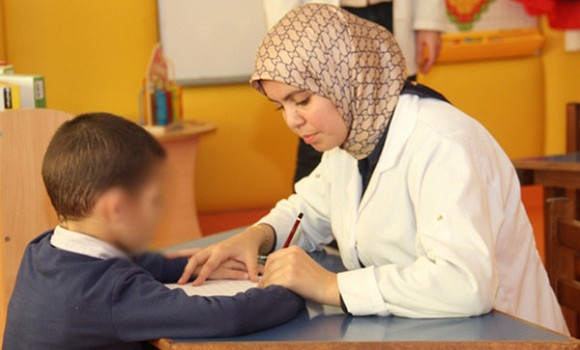
Early detection of autism takes center stage in a nationwide campaign across the country’s various provinces in preparation for the 2026–2027 academic year. Multidisciplinary teams of psychologists, speech therapists, and social workers are engaging directly with families to inform them about warning signs, address concerns, and guide them toward appropriate care services.
Initiated by the Ministry of National Solidarity, Family, and the Status of Women under directives from President Abdelmadjid Tebboune, this campaign aligns with ongoing sector efforts to step up early screening and specialized care for children on the autism spectrum.
The initiative aims to connect families with specialists and help parents better recognize indicators that warrant specialized evaluation. Through this effort, the ministry seeks to raise public awareness about autism and ensure faster referral of children to tailored support and care pathways.
This drive assumes heightened importance as the school year approaches and sectoral facilities prepare to welcome children with special needs under optimal conditions.
The ministry highlights the vital role of involving families and parents from the earliest stages of a child’s rehabilitation journey. Active parental involvement empowers families to spot red flags early and understand the necessity of timely intervention.
The overarching objective remains building the necessary conditions for education within a stable and tailored environment. Early screening stands out as a fundamental component of the support process, directing children toward resources aligned with their specific needs.
Since launching the operation, field teams report encouragingly positive engagement from families. Psychologists, speech therapists, and social workers continue outreach efforts, meeting parents directly across different regions and community venues.
This boots-on-the-ground approach fosters local dialogue, answers parental questions, and provides accessible information regarding autism spectrum disorder.
Listening, Informing, and Dispelling Misconceptions
Multidisciplinary teams prioritize direct interaction with parents. Exchanges focus on active listening, open discussion, and practical guidance, paying close attention to specific family concerns.
Specialists offer tailored advice to help parents navigate each stage of the support pathway. Simplified educational brochures and awareness materials are distributed to broaden access to essential information about autism.
The campaign also works to dismantle persistent misconceptions surrounding autism. In this context, targeted information and awareness serve as powerful levers, equipping families to better understand their children’s needs and connect with competent professionals.
Beyond initial screening, the strategy integrates each child into a comprehensive framework combining specialized care, rehabilitation, and educational and social integration.
The period leading up to back-to-school season gives the campaign special momentum. For the ministry, preparing for the schooling of children with special needs extends beyond institutional readiness—it requires advance preparation for both the child and their family.
Interventions by multidisciplinary teams aim to better equip parents and inform them of available support mechanisms. These efforts also solidify bonds between families and professionals tasked with supporting children along their developmental paths.
Through these actions, the Ministry of National Solidarity advances an approach grounded in early detection, specialized assistance, and active family involvement—a framework designed to provide affected children with expanded opportunities for academic and social inclusion.
The campaign will continue across provinces through the start of the school year following a structured field itinerary. Field teams will maintain their community outreach to complete planned phases and meet target objectives.
Ultimately, the campaign carries a message of early mobilization around children and their families. By emphasizing information, active listening, and guidance, the ministry aims to strengthen conditions for tailored care and promote effective integration of children into their academic and social environments.