

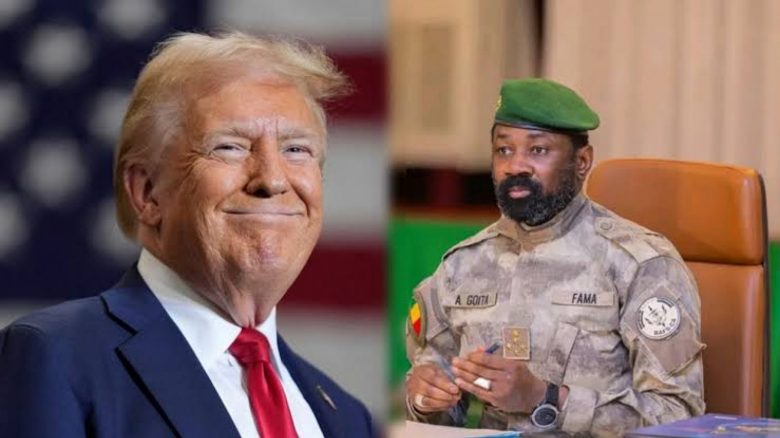
Facing the unilateralist retreat and transactional brutality of the second Trump administration’s doctrine, relations between Washington and the African continent are undergoing a shift as sudden as it is unprecedented. The goal is to examine in depth how the global geo-economic chessboard is disrupted by a doctrine favoring trade over aid, generating contrasting shockwaves across the continent that oscillate among opportunistic pragmatism, security concerns, and outright rejection of hegemonism.
Following the dismantling of the United States Agency for International Development in 2025, American foreign policy cast aside traditional soft power levers to embrace a purely mercantilist framework.
Less than twenty percent of former funding was absorbed by the State Department, and this recovery remains strictly conditioned on vital security requirements or tight alignment with Washington’s interests, as seen in the bilateral health pacts signed in late 2025 with eight targeted African nations. Although a bill under review in Congress aims to reinject roughly fifty billion dollars into foreign assistance for fiscal year 2026, its practical rollout promises to be difficult given the organizational chaos left by USAID’s destruction.
For numerous analysts, this case-by-case approach permanently weakens America’s soft influence and creates open avenues for other international players, primarily China, as well as the European Union and its financial development institutions.
These massive budget cuts illustrate the clear shift toward a trade-not-aid model that characterizes US-African relations under this new term.
This direction materialized vividly during the White House summit in July 2025, which gathered leaders from Gabon, Guinea-Bissau, Liberia, Mauritania, and Senegal, all selected for their unexploited natural resources to entice American investors.
However, experts point out a structural paradox: while the continent holds essential raw materials for global energy and technological shifts, it still suffers from a severe lack of unified governance and industrial oversight needed to weigh heavily on terms surrounding critical minerals.
This imbalance also shows in the erratic management of the African Growth and Opportunity Act. Active since 2000, the mechanism grants duty-free entry for a broad selection of goods into the US market. Nevertheless, outcomes remain mixed. The pact failed to energize bilateral trade links as envisioned, hampered by annual eligibility reviews that discourage long-term investments against a backdrop of rising politicization.
Having expired on September thirty, 2025, the accord was indeed extended retroactively on February six, 2026, but only through the end of the year, reigniting ongoing uncertainty. For several core sectors like textiles and agriculture, particularly in Kenya, AGOA remains a pillar for export revenues and jobs, yet its survival grows fragile daily.
A Continent Pushed to the Background
Concurrently, tariff increases announced in April 2025 by the White House hit several beneficiary states head-on, including Lesotho, Nigeria, and South Africa, even as Beijing opened its market duty-free to African nations. For experts, these contradictions permanently erode the image of the United States as a dependable partner.
On the diplomatic and security fronts, Africa was pushed to the background. In December 2025, the recall of nearly thirty American ambassadors worldwide, half of whom were stationed on African soil, signals a sharp pivot driven by the America First agenda. The 2025 US National Security Strategy places Africa at the bottom of its geopolitical priorities.
Led by Deputy Secretary of State Christopher Landau, American diplomacy now favors immediate economic and security demands over advancing democracy and human rights. This transactional diplomacy openly targets states offering a strategic pivot in the global race for resources. The clearest example of this approach lies in the Washington-sponsored peace agreement reached on December four, 2025, between Rwanda and the Democratic Republic of the Congo.
While some observers applaud this step, civil society groups denounce a cynical text that sidelines local communities and key armed actors to solely benefit access to strategic minerals essential for high-tech and defense industries.
These disruptions cause noticeable diplomatic friction across the continent. While certain leaders welcome this shift as a practical acknowledgment of Africa’s economic potential, others must navigate constant instability. Ties with South Africa, which maintains a non-aligned stance alongside close connections to China and Russia, turned particularly bitter following Pretoria’s filing against Israel at the International Court of Justice.
In retaliation, Washington imposed thirty percent tariffs, froze aid, boycotted the G20 summit in Johannesburg, and barred South Africa from US-hosted G20 sessions in 2026.
Tensions peaked with the appointment of a new American ambassador who is a prominent critic of Pretoria’s ruling party, worsening an already heavy atmosphere that was further strained by Iranian warships participating in naval drills off South African shores in January 2026.
Finally, US strikes in Venezuela and the capture of Nicolas Maduro sent sharply divided shockwaves across the African continent. On one side, countries like Egypt, Ethiopia, Kenya, and Nigeria kept a cautious silence to protect bilateral relations. On the other side, the African Union strongly condemned the abduction of the Venezuelan president and the strikes, demanding strict adherence to the United Nations Charter.
Ghana, for its part, described the US administration’s suggestion to temporarily govern the country and tap its oil reserves as an imperialist, colonial-era move. Furthermore, rejection was direct from Eritrea and South Africa, while Burkina Faso, Mali, and Niger labeled the arrest an unacceptable intrusion. Through these underlying reactions, Africa demonstrates its resolve to assert sovereignty against the unilateral moves of an American power attempting a mercantilist rebirth.