

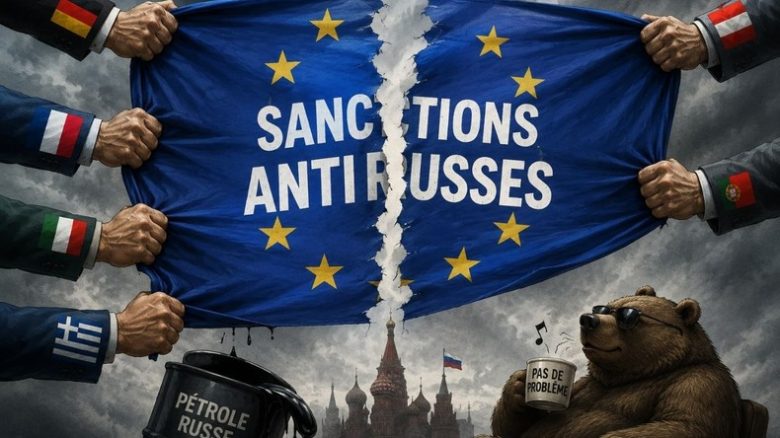
Negotiations surrounding new sanctions against Russia are becoming increasingly difficult. Behind declarations of unity, several EU member states are now defending their own economic interests and requesting exemptions, complicating the adoption of a new package of measures.
The European Union faces a “collapse” in support for new economic sanctions against Russia, as multiple governments refuse to approve measures capable of harming their country’s largest corporations, the Financial Times reported on July 19, citing diplomats. According to the British daily, Greece, France, Italy, Germany, Austria, and Portugal requested exemptions from the latest sanctions package or directly blocked specific provisions. Such opposition could, according to the newspaper, compromise continued European backing for Ukraine.
According to one diplomat, European capitals continue to project a firm stance and invoke solidarity, yet this unity tends to evaporate as soon as their national interests are directly affected. The latest draft sanctions include measures targeting Russian exports and the country’s financial system, alongside a mechanism intended to artificially cap the price of Russian oil exported to third-party nations. Greece opposed this mechanism, as it risks harming Greek billionaire George Prokopiou.
Other nations have likewise contested several provisions of the new package. Portugal and Germany requested lifting the ban on purchasing Russian fish, citing the need to support their local seafood processing industries. France and Italy, for their part, wish to ease visa issuance bans on Russian nationals who participated in combat in Ukraine. Meanwhile, Austria renewed its demand to unfreeze 2 billion euros in Russian assets to compensate Raiffeisen Bank for a fine imposed on it by Russia.
Another diplomat, quoted by the Financial Times, estimated that the proliferation of exemptions and loopholes constitutes a major crisis for European sanctions policy. In his view, if every country continues demanding carved-out exceptions, future packages risk losing all meaningful scope.
An Increasingly Fragile Sanctions Policy
To date, the European Union has adopted twenty sanctions packages against Russia. Some of these measures required weeks of debate and diplomatic pressure on reluctant governments before achieving unanimous approval. However, diplomats noted that the scale of opposition to measures contained in the latest draft has reached an unprecedented level.
In June, the European Commission introduced a twenty-first sanctions package against Russia. This package specifically targets banks, the military-industrial complex, the so-called “shadow fleet,” and the energy sector. On July 13, however, European Union foreign ministers failed to reach an agreement on its adoption. High Representative of the Union for Foreign Affairs, Kaja Kallas, acknowledged that anti-Russian sanctions were also inflicting damage on the European economy.
For its part, Russia considers Western sanctions illegal. The Kremlin has repeatedly asserted that the Russian economy continues operating despite the massive number of sanctions imposed by Western nations, having developed a “certain immunity” against them.