

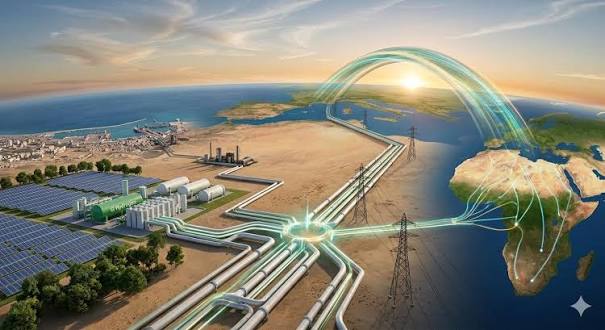
Driven by exceptional solar exposure and strategic infrastructure, Algeria is establishing itself as a powerhouse in the future green hydrogen market. While the nation climbs to the top of continental rankings due to production costs that are among the most competitive worldwide, accelerating this industrial shift now depends on structuring attractive financial systems to convert this natural capability into a lasting economic reality.
A new assessment confirms Algeria’s standing, ranking it among the African nations best positioned and most competitive for manufacturing low-cost green hydrogen by 2030, according to the specialized platform Ettaqa, drawing on American research. Recent projections indicate that nearly 80 percent of Algeria’s manufacturing capacity could be harnessed at a cost under 4.5 dollars per kilogram. This reinforces its competitive edge in the upcoming clean fuel market and places the country second in the Top 8 African nations regarding green hydrogen production costs.
According to the same source, Algeria holds 14 percent of Africa’s regional renewable energy capacity, making it one of the continent’s most promising participants in the rollout of green hydrogen initiatives.
The report also emphasizes that the nation benefits from one of the finest solar reserves on earth, alongside significant wind assets. Across Africa, the technical potential for clean energy exceeds 1,000 terawatts—a theoretical volume large enough to manufacture over 45 billion tons of green hydrogen annually, based on evaluations from the International Energy Agency (IEA).
However, high financing costs remain the primary hurdle to expanding this sector, the specialized platform notes. The study points out that the weighted average cost of capital (WACC) serves as the main barrier to lowering green hydrogen production expenses and accelerating project deployment.
The weighted average cost of capital represents the comprehensive expense of financial resources gathered by corporations to fund their ventures, whether through loans or alternative funding channels, experts clarified. This metric depends on interest rates, the corporate investment climate, taxation systems, and expected financial returns. The study clarifies that capitalizing on natural advantages requires an improvement in borrowing conditions. A high cost of capital diminishes the appeal of foreign investments in renewable energy and green hydrogen ventures, despite the vast natural assets available in the country.
Ettaqa additionally touched upon manufacturing capabilities across the African continent, observing that actual low-emission hydrogen output remains “highly restricted.” Based on International Energy Agency data, it does not exceed 6,000 tons per year, showcasing a significant gap between available capacity and the real development status of this industry.
Nevertheless, Algeria, alongside other African countries, possesses solid advantages to position itself among the top global producers in the coming years. This is exactly what the state is working toward through its national strategy for green hydrogen development. The ambition is to turn into one of Europe’s primary future green hydrogen suppliers. The country holds genuine advantages to fulfill this role, especially since interest has already been voiced by several nations and active projects are underway.
Strategic alliances are already forming, particularly with Germany, aiming to generate this power source in Algeria and export it to the European market. This will be achieved notably via the SoutH2 Corridor infrastructure project, designed to transport hydrogen directly to Germany. Beyond Germany, Italy and Austria are also active stakeholders in this pipeline venture.