

With power consumption projected to hit an all-time high during the summer of 2026, pushing demand toward an estimated 22,150 MW, Sonelgaz has deployed a comprehensive operational framework to ensure grid stability. Concurrently, public authorities are scaling up awareness campaigns, leveraging media networks to foster sustainable consumption habits and protect the nation’s energy security.
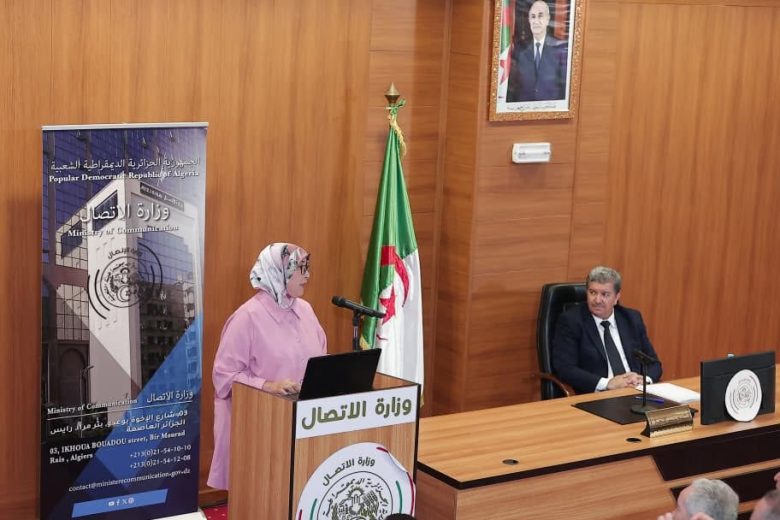
Detailing this strategic roadmap during an executive media briefing held on Saturday under the banner “National Media: Key Partners in Cultivating Energy Efficiency,” Sonelgaz Communications Director Fatima Merzougui explained that the blueprint, built in tandem with the Ministry of Energy and Renewable Energies, balances demand forecasting, generation capacity expansion, and grid infrastructure reinforcement.
The preventative plan spans the entire domestic power grid, encompassing the interconnected northern network, the Ain Salah-Adrar-Timimoun hub, and remote southern grids. Specific contingency protocols are locked in to absorb seasonal consumption spikes. Sonelgaz projections indicate that peak load on the primary interconnected grid will reach 21,350 MW under standard seasonal conditions—marking a 3.5% uptick from last year. However, should severe heatwaves hit, demand is modeled to jump to 22,150 MW, representing a 7% surge. Consumption is similarly forecast to climb by 3.5% in the Ain Salah-Adrar-Timimoun cluster and by 10% across the deep south networks.
Mrs. Merzougui attributed this accelerating baseline to two structural factors. First is the continuous expansion of the national customer base. Notably, Sonelgaz recently connected over 200,000 agricultural operations to the grid, while prioritizing power supply to critical food security megaprojects, new industrial parks, and economic zones. This rapid expansion mirrors Algeria’s broader socioeconomic development, which demands a continuous expansion of generation assets and transmission systems.
The second driver is the global reality of rising temperatures. Extreme climate anomalies recently recorded across Europe underscore a broader systemic shift that mechanically escalates domestic air conditioning loads.
The director also provided context on the evolution of peak demand, highlighting how consumption hovers around 10,000 MW for nine months of the year before doubling to over 20,000 MW during the three peak summer months. For instance, peak demand climbed from 19,543 MW in 2024 to 20,620 MW in 2025—a single-year increase of roughly 1,000 MW, which equates to the entire output of a modern combined-cycle power plant. To safely navigate the 2026 surge, Sonelgaz is integrating ,1855 MW of fresh generation capacity, including 1,010 MW derived from green energy sources. This initiative advances the state’s clean energy diversification roadmap, given that approximately 98% of the country’s current installed capacity—which exceeds 27,000 MW—remains heavily reliant on natural gas.
The logistical rollout also includes widespread infrastructure upgrades, featuring 58 new high-voltage transmission projects, 640 local distribution stations, and 1,640 kilometers of medium and low-voltage power lines.
To date, 780 MW of this new capacity is already online, comprising 368 MW of conventional thermal power and 220 MW from two newly integrated solar fields. By the end of July, an additional 598 MW is scheduled to enter commercial service, consisting of 278 MW of conventional power and 320 MW from renewable projects.
On the transmission front, 41 of the 58 scheduled substations are fully operational, with another eleven on track for commissioning by late July. Civil works for distribution networks are nearly complete, with substations sitting at 100% execution and medium-voltage lines at 98%. Across the far south, diesel generator conversions and facility overhauls have reached 84% and 85% completion respectively, unlocking over 150 MW of incremental localized capacity. Grid rehabilitation and upgrade works in these southern zones are entirely finished. Beyond heavy infrastructure spending, Sonelgaz is maintaining a rigid preventative maintenance cycle and expanding its rapid-response field units.
During the workshop, organized in coordination with the Ministry of Communication, Minister Zoheir Bouamama underscored the necessity of robust media engagement, reiterating that regulating energy consumption remains a core geopolitical priority to protect national resources, guarantee energy sovereignty, and sustain domestic industrial expansion. Meeting these challenges, he concluded, dictates sharper demand-side management and aggressive anti-waste measures.