

The National Liberation Front (FLN) secured the top spot in the legislative elections held on July 2, 2026, capturing 90 out of the 407 seats in the National Peoples Assembly. This represents an unanticipated outcome for the historic party, which undergoes a significant erosion of its electorate and a substantial loss of its traditional support base during each election cycle. Figures from the ballot count reveal a clear bleeding of the old partys conventional stronghold. This fresh alignment provides a glimpse of what might materialize during the upcoming municipal and provincial elections scheduled for this autumn.
Nevertheless, this tally enables the FLN to maintain its dominance over the strategic and influential structures of the parliaments lower chamber, particularly the assemblys presidency, vice-presidential slots, and the human composition of various specialized committees.
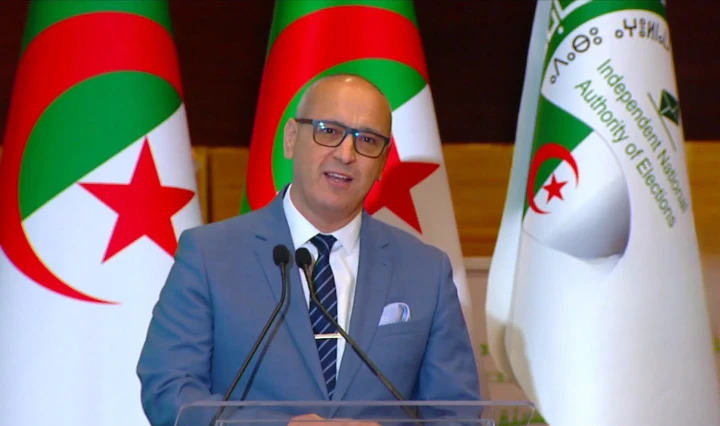
According to the provisional findings disclosed on Sunday by the acting head of the National Independent Electoral Authority (ANIE), Karim Khelfane, the National Democratic Rally (RND) claims the second spot with 73 seats, followed closely by the El Moustakbal Front with 59 seats and the Movement of Society for Peace (MSP) with 43 seats. Meanwhile, the El-Bina Movement secured 38 seats, falling short of its electoral goals, undoubtedly due to the disqualification of its candidate list in the Algiers province.
The RNDs performance is quite dramatic, as it gained nearly twenty additional seats, directly challenging the FLN and tailing it closely. Within the party, this outcome has been greeted with great fervor and is expected to motivate officials and activists to approach the forthcoming autumn local elections with heightened expectations.
Independent candidates, with 32 seats, experienced a sharp decline, contrasting with their position as the nations second-largest political force in 2021, when they achieved a post-Hirak electoral landslide.
For its part, the Front of Socialist Forces obtained a dozen seats, placing just behind the Sawt El Chaab party. Under the internal regulations of the National Peoples Assembly, the FFSs score prevents it from forming an official parliamentary bloc, barring any subsequent legislative amendments.
With four seats, the RCD marks its return to the lower house, alongside other political groups such as Jil Jadid (3 seats), the Workers Party (3 seats), TAJ (3 seats), and the Front for Justice and Development (3 seats).
Ultimately, the incoming parliament will comprise 23 distinct political parties alongside independent representatives. This rather diverse mix does not, however, disrupt the major political balance within the National Peoples Assembly, where the so-called majority alliance linking the FLN, RND, El Moustakbal, and likely El Bina is anticipated to be renewed for this legislative term. Consequently, a genuine status quo prevails within the future legislature.
Evidentially, the re-examination of appeals lodged by various political factions could alter the provisional outcomes declared on Sunday. This likelihood is kept in mind following the 2021 experience, when the FLN and several other parties stripped away numerous seats.
Regarding voter turnout, the participation rate reached 21.24% domestically and 10.75% among the diaspora community living abroad. The phenomenon of voter abstention is now firmly entrenched in Algeria and prompts a multitude of concerns. The decline in turnout, particularly for legislative races, commenced in 1997, surely following the officially acknowledged reality of massive electoral fraud that allowed the newly formed RND of that era to sweep the elections just two months after its inception.
It would be unfair to blame political organizations for structural failures or bankrupt rhetoric to explain this chronic absenteeism, as other objective factors clarify the trend, notably the erosion of trust between citizens and elected officials, alongside the murky connections between illicit funds and politics.
On the other hand, one must note the re-emergence of an inexplicable phenomenon involving blank ballots, which have hovered around one million votes across several recent polls. This is a tally that penalizes both the parties, their nominees, and the legitimacy of the vote itself.