

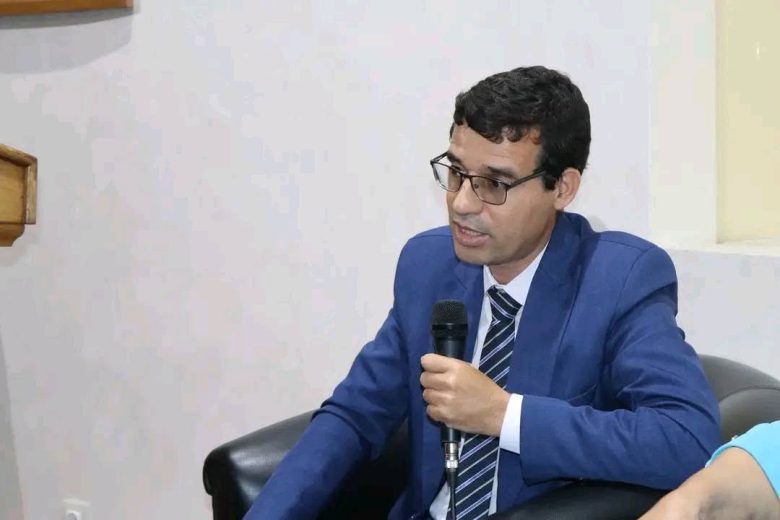
Following directives issued by President Abdelmadjid Tebboune during the latest Council of Ministers session concerning the setup of a National Archaeology Agency positioned directly under the oversight of the Presidency, Abdelkader Dahdouh, an archaeology professor at the Tipasa University Center, evaluates this reform in an interview with Le Jeune Independant. He characterizes the initiative as a structural turning point that injects fresh momentum into national heritage and archaeological research.
Interview conducted by Khalil Aouir
Le Jeune Independant: Does the establishment of the National Archaeology Agency, which is now answerable to the Presidency, signify a genuine turning point for managing and promoting archaeological heritage in Algeria?
Professor Abdelkader Dahdouh: The inception of this National Archaeology Agency is indeed a historic milestone, given that the governance of Algerias archaeological sector has undergone numerous institutional shifts since independence. Initially operating as an administrative public entity, the former National Agency of Antiquities and Archaeology (ANAA) (1987) was converted into the National Office for the Management and Exploitation of Protected Cultural Property (OGEBC) (2007), a commercial and industrial public corporation.
Subsequent entities were established later, including the National Agency of Protected Sectors (ANSS) (operational since May 2013), cultural park offices, museums, alongside two dedicated research hubs: the National Center for Archaeological Research (CNRA) and the National Center for Prehistoric, Anthropological, and Historical Research (CNRPAH). Historically, all these bodies operated under the supervision of the Ministry of Culture and Arts.
Currently, the creation of this fresh entity and its alignment with the Presidency is by no means accidental. Instead, it stems from a thorough assessment of existing institutions and the actual state of heritage governance nationwide, particularly concerning fieldwork, excavations, conservation, site security, and economic optimization.
Le Jeune Independant: How exactly could the creation of this new agency transform the involvement of Algerian academics and scholars in archaeological research and excavation initiatives?
Professor Abdelkader Dahdouh: At present, the vast majority of research and excavation ventures within Algerias archaeological domain depend on the voluntary efforts of university researchers, lacking any specialized funding, unlike restoration or development programs. The introduction of this agency under presidential authority is bound to provide a powerful stimulus to archaeological fieldwork and research. It will enable scholars to pitch and register new initiatives that will likely receive financial backing from the newly established structure.
Le Jeune Independant: During the most recent Cabinet meeting, President Abdelmadjid Tebboune decided to provide this agency with a dedicated police unit tasked with protecting and monitoring all archaeological heritage. What is your assessment of this initiative?
Professor Abdelkader Dahdouh: Regarding the antiquities police, establishing a specialized division represents a major shift in heritage preservation policy. This mechanism should not only maximize the efficiency of security protocols at monuments and historical sites across the country but also complement the efforts of active security branches, namely the National Gendarmerie, National Security, and Algerian Customs.
In reality, the personnel currently handling heritage surveillance lack sufficient training, and their numbers remain inadequate. In this context, rolling out a specialized force under the direct command of the National Archaeology Agency stands as a historic measure capable of significantly upgrading site protection while giving these monuments the prestige and respect they deserve.
Le Jeune Independant: The new National Archaeology Agency is expected to operate under an industrial and commercial public status. What does this model imply in practice, and what benefits could it deliver for administration and financing?
Professor Abdelkader Dahdouh: Concerning economic maximization, selecting a commercial and industrial corporate model for the National Archaeology Agency is equally strategic. Despite the vast potential embedded in our national heritage, its economic utilization has remained well below expectations to this day.
Indeed, even with older structures in place, bureaucratic inertia and gaps in the legal framework slowed down the fulfillment of targets in this arena, which undeniably hinders the optimal exploitation of heritage wealth and its potential economic returns.
Le Jeune Independant: In light of these factors, how exactly could being attached to the Presidency prove advantageous?
Professor Abdelkader Dahdouh: By elevating archaeological heritage to a top national priority, this direct tie to the Presidency can act as a major catalyst. It is positioned to eliminate the bureaucratic bottlenecks and financial constraints that have stifled growth for years, thereby paving the way for a genuine renaissance in research, excavations, restoration, and the showcasing of the nations historical treasures.