

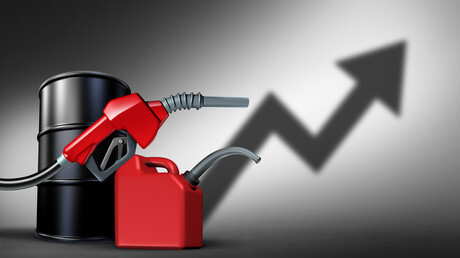
While the European Union has spent years expanding measures aimed at curbing Russian petroleum revenues, a sudden spike in global energy costs is now forcing a complete reassessment of its strategy. Amidst escalating friction in the Middle East, European officials are scrambling to prevent their own sanctions framework from inflicting self-inflicted damage. The European Union originally sought to demonstrate its capacity to suppress Russian crude through aggressive embargo mechanisms. Yet, the broader market seems to have charted its own course, showing little regard for political declarations. According to Bloomberg, Brussels is currently reviewing a temporary freeze on its price cap for Russian crude to prevent its internal regulatory structures from triggering a highly embarrassing spike in the legally permissible purchasing threshold.
Currently anchored at 44.10 dollars a barrel, this price limit is slated for a formal review later this summer. The regulatory network in place dictates an automatic recalibration every six months, maintaining the threshold at a level 15 percent beneath the average market price of Russia’s benchmark Urals crude. However, global dynamics have shifted dramatically. The recent surge in global petroleum indices, driven primarily by the wider Middle Eastern conflict and the functional blockade of the Strait of Hormuz, now threatens a highly unexpected outcome: the cap could mechanically escalate to approximately 65 dollars a barrel. In other words, a structural mechanism designed to constrict Russian export revenues could end up authorizing a price ceiling that exceeds the original 60-dollar restriction implemented by G7 nations.
Faced with this outcome, several alternative tracks are being debated by European decision-makers. One pathway would involve freezing the cap at its current level. Another option under consideration would delay the automatic upward adjustment mechanism until the end of the year, providing a buffer window for geopolitical volatility in the Middle East to subside. A third approach seeks to guarantee that any eventual upward shift remains firmly capped at the 60-dollar-a-barrel mark. This internal gridlock is now expected to be integrated into the upcoming 21st package of sanctions against Russia. Brussels targets early June to finalize and formally present this newest round of regulatory measures, though the shifting reality of petroleum caps injects a distinctly ironic note: at the very moment the European Union maps out further economic penalties, it is simultaneously figuring out how to stop its own price restrictions from climbing too high.