

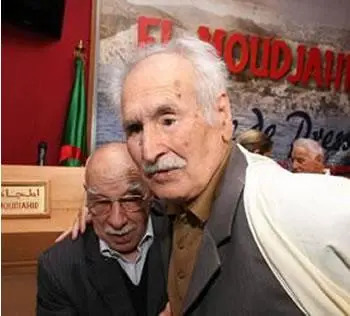
Iconic Algerian nationalist Mohamed Saïd Mazouzi—”Moh Saa”—spanned the century humbly. In memoirs, shunning hero label, he delivers vital May 1945 testimony. From Casbah activism to 17 colonial jail years, he unpacks how May 8 bloodshed finalized France divorce, birthing November 1, 1954.
Final mission: narrate “for today’s youth what we endured,” we that generation. “Not our trivial tales, but people’s suffering, sacrifices for Algeria’s survival.” With Lahcène Moussaoui—Sarrouy college alum, ambassador (Tunis, Brasilia), secretary-state cooperation-Maghreb affairs (1996-1999)—Mo Saa penned 431-page legacy. “No hero pretensions. Militant, arrested post-May 1945, 17 prison years… Didn’t make History; witnessed it… Algeria made me… Luck or chance placed me right spots, moments, company.”
Casbah-born (Rue Sidi M’hamed Chérif, Houanet Sidi Abdellah), Mazouzi joined 1944 independents via spring AML. Recruited by Dellys PPA chief Mohamed Zerouali, forged with Omar Oussedik, Ali Laïmeche.
April 1945: Tizi-Ouzou maure cafe arrondissement meet led by Ali Hallit. Sole agenda: May 1 labor march. “Long debate; deferred—more negatives than positives. Worst colonial admin; repressive sub-prefect Feret. Too risky. Party endorsed.” PPA prioritized Algiers May 1 (per Aït Ahmed).
Weeks later, same group reconvened. “Told Party planned localized insurrection easing East brothers—Sétif, Kherrata, Guelma.” Clandestine PPA HQ ordered general Kabylie uprising Thursday May 23, midnight—to relieve Constantinois North.
“Those regions faced colonial army racism, hate vs. people who freed them—ignobly blood-repressed. Aviation, navy joined; sadly colonial troops: Senegalese, Moroccans, Foreign Legion.” Truthfully, Mazouzi admits scant East details—rumors. Lamine Debaghine reportedly disguised as old woman for intel, dodging checkpoints.
————–No Turning Back
Faced repression ferocity, “no retreat,” Moh Saa explains. “Had to own responsibilities, consequences. Organize regional insurrection scatter enemy forces.” Ultimate party counter-order halted. “Last-minute envoys: ‘Stop! Risk too great.’ They were right.”
Overt activism, popular surge tipped colonials to brewing revolt, concrete plans—including Bachagha Aït Ali affair. Post-Vichy, he regained power, “very potent,” formed militia; interrogated, slapped militants publicly. Militia looted under search pretexts. “Personalized colonial admin, took undue liberties, flouted law, rampant abuses.”
Faced “vast repression,” party ordered evade capture, ponder response. Local chiefs, HQ validated: boycott elections, justice, admin, markets; symbolic hits on Bordj Ménaïel caïd, Dellys field guard, Bachagha Aït Ali—slated September 1945. “Thus region countered poorly grasped, imposed events—best we could, all fallout.”
Ignores Aït Ali plot decision, but attended ops meeting: Amar Haddad (“Blue Eyes”), Oussedik, Zerouali et al. “Plotted execution team. ‘Blue Eyes’—later 1949 Oran post OS attacker—insisted join. Zerouali tasked me shelter team; called kin for Ramadan meal.” Bachagha wounded, survived. “Sparked massive repression.”
Makouda five arrested: Ali Hamraoui, Ben Djoudi, Amar Hamraoui, Saadi, Chabni. Tortured, named me chief—despite no organic link, though Ali, Saadi PPA.
Gendarmerie nabbed Mazouzi Tizi-Ouzou souk market day. Weeks “wandering” gendarmerie-police—Tizi-Ouzou, Tigzirt, Dellys—”brutal interrogations, tortures, abuses imaginable”—then Algiers central commissariat basement. Next: Cavaignac permanent forces tribunal.
Post-interrogation, military judge jailed Barberousse (Serkadji). “Imagined worst; never 17 years prison-hopping.” Barberousse, Tizi-Ouzou, Blida, El Harrach, El Asnam, Marseille (Saint-Pierre, later Baumettes), Paris (La Santé), Melun (Saint-Pierre fortress), Clairvaux (Aube), Chaumont (Haute-Marne), Oran, Melun (Seine-et-Marne). “17 years: endured, saw, heard… Initial dread natural; drew more positive than bad. Colonial jail schooled manhood. Learned vastly more than suffered: man’s depths, Algeria’s, Algerian’s.” Shared cells, visits, courts with national leaders, Revolution martyrs, militants. “Prisons long, terrible tale.”
———-1945 Independence Turning Point
Despite “worst” May 1945—arrest month, long jail—Mo Saa late-life reframed as “best.” Defining rupture in Algerian history, bloody May shifted national movement attitudes, colonized mindset. Post-painful spring, independents switched gears. “Extraordinary popular conscience ripple: right to rise, fight France. Culminated nationalist awakening.”
“France-Algeria done; divorce sealed May ’45. May ’45 pregnant with ’54, birthed it. Shaped November ’54—most elements from ’45.” Example: Amar Ouamrane (1919-1992) tapped 1945 men for zone IV post-Bitat arrest: Chérifi, Saadoun et al. “1945 pivot in independence fight, shook continents, let Algeria reclaim sovereignty—unpaused since 1830. Seeming calm belied seething.”