

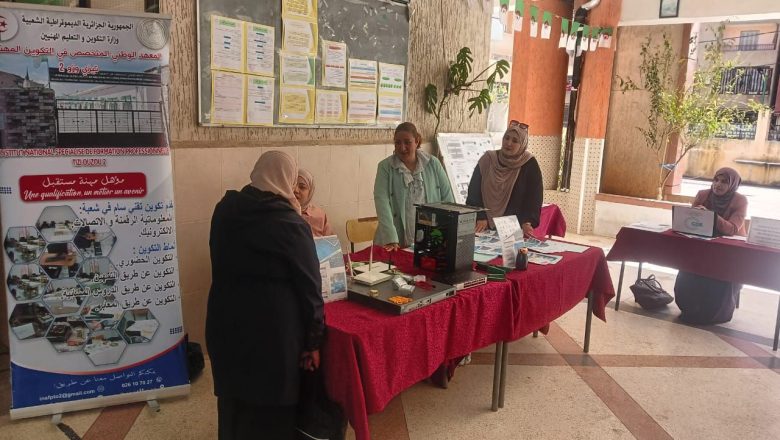
Under a partnership between the Ministry of Tourism and the Ministry of Vocational Training and Professional Education aimed at upgrading the skills of Algerian artisans, a new training session for 20 artisans from the wilaya of Tizi Ouzou was launched this Monday at the INSFP “Imarazoukène Mohand‑Arezki” in Tizi Ouzou.
Jointly organised by the Chamber of Artisanry and Crafts (CAM), under the supervision of the directorate of tourism and the directorate of vocational training and professional education, the programme “aims to modernise traditional know‑how while adjusting it to the demands of national and international markets,” stressed Azzedine Abdous, head of the Tizi Ouzou CAM.
This training coincides with events marking National Heritage Month, officially launched the previous day by Tizi Ouzou’s directorate of culture and the arts. Artisanry, in all its variety, represents a cultural and identity‑based heritage of major value. “Beyond its heritage dimension, these crafts are increasingly seen as a strategic economic lever capable of generating employment and supporting local small enterprises,” added Abdous, underlining the rationale for the training.
“Our ministry, in cooperation with the Ministry of Vocational Training and Professional Education, has launched these sessions to meet artisans’ needs and help them better publicise and place their products on local and international markets,” the Chamber director explained. “This involves improving production techniques, marketing, packaging, even learning English.” He specified that the initiative also seeks to professionalise artisanal activity and to enable craft workers to better promote their creations, including for export.
Recalling that the first session was held at the CFPAT in Boukhalfa, a specialised training centre for artisanal trades, Abdous then detailed the programme of this second session, scheduled from 19 to 30 April. During this period, artisans will receive both theoretical and practical instruction aimed at:
- enhancing the value of traditional and local‑heritage products,
- acquiring modern marketing techniques and promoting products in line with national and international market rules,
- improving product quality and progressing toward accreditation, certification, and the development of a brand,
- stimulating entrepreneurship and opening up to foreign markets,
- strengthening the identity of local products,
- understanding the importance of cultural and commercial promotion,
- highlighting the distinctive features of products by region,
- understanding the rules of international presentation,
- preparing products for export according to quality, design, and packaging standards,
- and mastering digital‑marketing tools such as Facebook, Instagram, TikTok, Shopify and similar platforms.
The curriculum also covers the design of a visual identity and compliance with the norms of local and international markets, along with the development of a short‑term marketing plan, the monitoring of production and stock, and the identification of available support opportunities.
For his part, Azeddine Adjouati, director of vocational training and professional education in Tizi Ouzou, who opened the session, stressed that “these trainings are essential for strengthening competitiveness,” while reiterating “the full willingness of his department to support local artisans in better structuring their activities and the sales of their products, even toward labelling.”
Finally, it should be noted that this initiative, designed to give genuine added value to artisanal work, arose from an observation made by the Minister of Tourism, Houria Meddahi, during the International Traditional Industries Fair in Milan. Confronted with perceived shortcomings, she decided to push for better training of artisans to strengthen their capacity to operate in domestic and global markets.