

The General Union of Algerian Traders and Artisans (UGCAA) has stated that the overall situation of supply and prices on the national market remains “normal and stable,” explaining that the “limited” price increases recorded for certain agricultural products are “temporary and seasonal.”
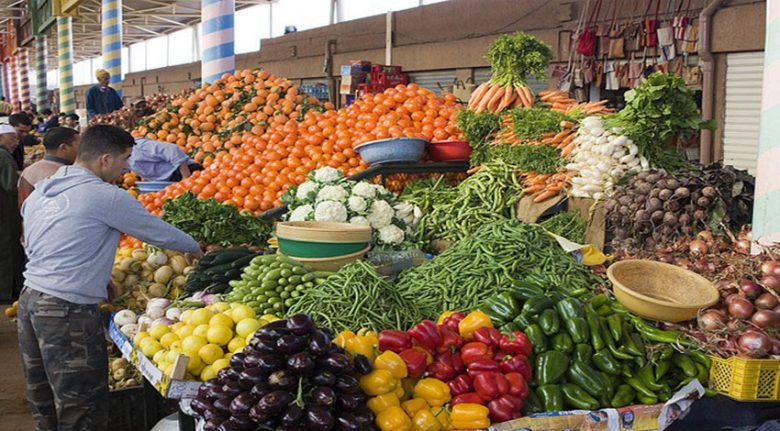
Addressing growing public concern over recent price hikes, the UGCAA stressed that the modest rises observed for some products—particularly certain vegetables such as tomato, carrot, and garlic—are linked to climate conditions, production cycles, and periods when supply falls short of demand. Such fluctuations are a natural phenomenon also seen in international markets, the union noted, while insisting that the broader supply and pricing situation in Algeria remains “normal and stable.” Nevertheless, these price pressures weigh on household budgets. For example, tomato prices currently range between 230 and 280 DA per kilogram, reaching 320 DA in the Bab Ezzouar district of Algiers. Carrot and turnip are selling for 150–180 DA per kilogram depending on the market and neighborhood, while zucchini prices are similar. Garlic has climbed to about 1,200 DA per kilogram.
Nonetheless, the UGCAA forecasts that prices will ease in the near term. It indicated that improving weather conditions and the arrival of new agricultural harvests in the coming days will boost supply, restore balance, and even lead to a gradual downward correction of prices, in line with current on‑the‑ground indicators. The union also highlighted that prices for many other items remain stable.
According to the traders’ union, the vast majority of other consumer goods—whether vegetables, fruits, or basic foodstuffs—are available in sufficient quantities, at reasonable prices, and supplied regularly on shop shelves at prices that remain within the framework of current regulatory price ceilings. This reflects, according to the UGCAA, both market stability and the effectiveness of the efforts deployed by various actors, including the Ministry of Agriculture and the Ministry of Domestic Trade and Regulation of the National Market, as well as field‑based monitoring services that supervise the enforcement of price and supply regulations.
The union also emphasized that these “temporary and seasonal” fluctuations are a natural and short‑lived feature of the market and cannot be separated from the broader context of ongoing economic and social transformations, as well as from shifting geopolitical dynamics—particularly in the Middle East region and their direct and indirect impact on supply chains and international markets. Within this framework, the UGCAA said it continues to work in close coordination with public authorities, especially the Ministry of Domestic Trade and Regulation of the National Market, as well as with other relevant institutions, to ensure product availability, maintain regular supply, and preserve price stability across the national territory.
The UGCAA further praised “the responsibility of traders and the vigilance of Algerian consumers,” and urged all parties “not to succumb to rumors and false information spread by certain malicious pages,” which it accused of seeking to disturb market stability and encourage unjustified behaviors contrary to the general interest. On this basis, the professional organization called on all traders to “act responsibly,” to “contribute actively to market regulation,” and to “reinforce balance” while safeguarding citizens’ purchasing power, resisting the temptation of short‑term profit at the expense of consumers’ pockets.