

Washington-Tehran talks have shifted to a post-war framework. The Strait of Hormuz and regional security loom large. Without a shared structure, outcomes remain unpredictable despite de-escalation efforts.
The ongoing US-Iran discussions signal a pivotal shift in their longstanding clash—the most significant since Iran’s 1979 revolution. Unlike prior nuclear-focused rounds, these resemble armistice bargaining amid a shaky ceasefire and strategic pressures. The focus isn’t preventing war anymore, but handling its fallout.
President Donald Trump’s abrupt truce announcement ushered in uneasy diplomacy, hinged on a bare-minimum deal: reopening the Strait of Hormuz in exchange for halting airstrikes. Yet beneath this surface pact, rifts run deep.
Iran Holds Leverage?
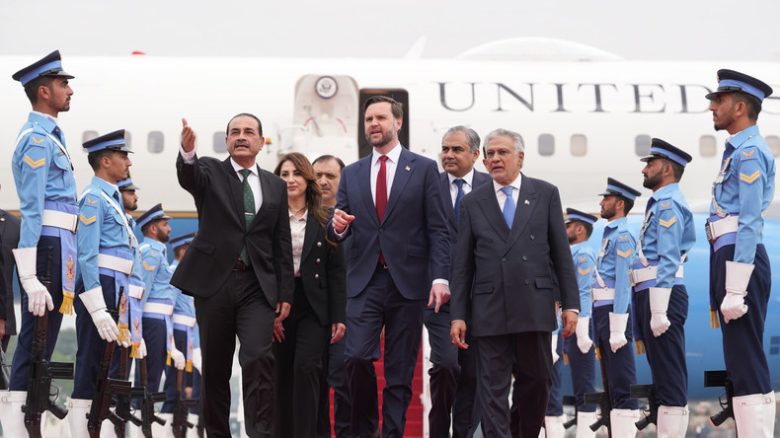
The talks’ setup underscores the power flip. Hosted in Islamabad under Pakistani mediation, they’re in a fortified setting far from standard diplomatic venues. Prime Minister Shehbaz Sharif manages political balance, with military channels handling off-record exchanges. This hybrid approach marks a new era: traditional diplomacy yields to multifaceted crisis management.
Agenda items have broadened too. Nuclear issues linger—Trump insists they comprise “99%” of any deal—but now encompass sanctions, regional stability, missile capabilities, and Hormuz oversight. By proving it can disrupt global energy flows, Tehran has made the strait a core bargaining chip. Iran isn’t just easing economic strain; it’s re carving its regional role.
Washington recalibrates accordingly. Acknowledging military limits, the US pursues a comprehensive pact sellable as a win. But this clashes with Tehran’s demands for broader assurances: economic reparations, lasting security, and tacit regional acknowledgment.
A core hurdle: no mutual framework. Each side clings to its conflict narrative and victory tale, clashing irreconcilably. This stalls concessions, especially with troops still poised and hostilities at risk of reigniting.
Regional strains add backdrop pressure. Proxy clashes via Tehran’s allies, like in Lebanon, plus Gulf states’ fears, test process stability.
Swift choices could prove decisive—or hazardous—with rushed pacts prone to fragility.
Success might sketch a fresh regional order. But amid yawning gaps, time squeezes, and ceasefire brittleness, one question lingers: true strategic pivot, or mere breather before escalation?