

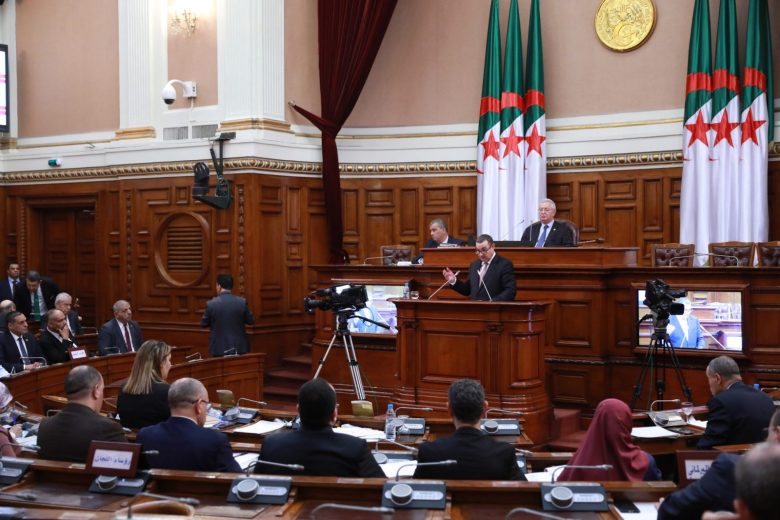
The Nation’s Council unanimously passed this Friday a key organic law on political parties, along with the outstanding provisions of the road traffic code, during a plenary session chaired by Council President Azouz Nasri. Interior Minister, Local Authorities, and Transport Minister Saïd Sayoud attended, hailing both measures as pivotal steps toward bolstering transparency and democracy in political life while enhancing public safety.
Nasri opened his remarks after the political parties law’s approval by stating that “overhauling party operations marks a vital phase in cementing democracy and political pluralism.” He stressed that the legislation aligns with the state’s drive, led by President Abdelmadjid Tebboune, to address flaws in political groups’ operations and solidify rule-of-law principles. The reform, he argued, strikes a balance between political freedom and demands for openness, accountability, and internal discipline.
The Council president added that the law will “build public trust in political activities” and spur broader voter turnout in elections, while tightening oversight and governance standards within parties.
The competent commission’s supplementary report highlighted the urgent need to update the legal framework for party activities, boost financial and organizational transparency, and promote youth and women’s involvement in politics.
For his part, Sayoud praised the measure post-vote as “foundational,” saying it ushers in a fresh era of regulating national political life through transparency and curbing excesses.
The session’s second half focused on the pending clauses of the road traffic code bill, stemming from a joint committee between Parliament’s two chambers.
The interior minister outlined the bill’s core directions, noting it fits into a comprehensive push “to heighten road safety and safeguard lives.” He explained that the adopted tweaks revise certain offenses, ease some penalties, adjust fine amounts, and align rules with national law—balancing prevention with deterrence.
Nordine Bonfla, a Nation’s Council member, read the joint committee report detailing changes like reclassifying offenses, scrapping unfit criminal labels, and upholding harsh penalties for the gravest cases, especially fatal road accidents.
Council members then unanimously approved the pending clauses and the full road traffic code text, backed by 131 votes.
After the vote, Sayoud commended “a balanced legislative compromise, born of joint effort between the chambers,” which strengthens road safety and public road discipline.
Closing the session, Nasri declared the approval reflects “the state’s commitment to citizen protection and positioning road safety as a cornerstone of overall public security.” He cautioned, however, that “the law’s success hinges on strict enforcement and engagement from all stakeholders.”